Economy

Inflation, Interest and Money
1. What Is Islamic Finance? A Simple Global Guide Islamic finance is an approach to managing money that is founded on the ethics and ideals of Islam. It is founded on Shariah principles of people with regard to earning, spending, and lending money. Islamic finance does not permit any interest or “riba” unlike traditional banking. This is regarded as exploitative because money is supposed to be derived from commerce, investment, and productive economic activities. It’s about conducting real business, sharing the money and doing honest business. Islamic banks invest their money exclusively in authorized areas and do not invest in negative sectors like gambling and alcohol.Today, Muslims and non-Muslims in many parts of the world use Islamic banking.. It encourages openness, social responsibility, and fair money. This makes it an important part of the world

Global Economy and Development
1. How the Global Economy Works On the world market people from different parts of the world can purchase and sell goods, use technology, invest money in each other’s countries. International economic linkages are forged when countries trade with each other. Companies sell to people in lots of nations. The laws nations establish effect markets all over the world. There are also people, corporations and banks that aid the international economy. The performance of an economy is determined by the number of jobs, the rate of inflation and the value of the currency. When countries can do more items and services more efficiently, the world economy grows. Technology and travel have given countries more opportunities to communicate with each other than ever before. Those who understand how the world economy works may have a better

Business, Banking and Economy
1. Relationship Between Business and Economy Business is very directly related to the economy, as they provide the goods and services consumers need on a daily basis. A strong economy encourages people to spend more, to invest more, and to create more jobs, helping businesses to grow. And the excellent companies do make money, hire people and pay taxes which contributes to the economy. As a business grows, it puts out more things and the market gets more active. A firm’s performance is affected by inflation, unemployment, interest rates in the economy and other things. Simply put businesses are good for the economy and a good economy gives businesses more chances to flourish and compete locally and globally. 2. Role of Banks in Economic Development Banks are particularly important to economic growth because they control

Economic Basics
1. What Is an Economy? A Simple Explanation A market is a place where people trade what they need. It is about business, labor, government, and customers. Every country has its own economy. Its economy helps it to control its money, resources, and trade. Beneficial for the economy are people working and making money and spending money. A strong economy helps businesses and makes living better and gives jobs. An economy could be a town market up to a whole economy. Understanding the economics makes you smarter about your money, more efficient in the use of resources and helps you understand how money works in day to day life. It belongs to the life and development of the contemporary world. 2. How the Economy Works Step by Step The corporation is involved in manufacturing, distribution
Economic Cycles, Crises and Future
1. Economic Cycles Explained Simply “The economy is a roller coaster. This process is a natural cycle over time. These cycles have stages of expansion, peak, recession and recovery. The bigger the firms get, the better they do, the more jobs they create, the more money people spend. We have a recession, the economy slows down, people lose jobs, people don’t spend as much, it’s hard. In challenging times governments and central banks often adjust their modus operandi to keep the economy stable. To make prudent financial decisions organizations, investors and individuals need to understand economic cycles. Economic cycles effect jobs, interest rates, inflation and world trade. Understanding the working of these cycles is important to understand the long term growth of the economy and financial stability in modern economies. 2. What Is a Recession

Inflation, Interest and Money
1. What Is Islamic Finance? A Simple Global Guide Islamic finance is an approach to managing money that is founded on the ethics and ideals of Islam. It is founded on Shariah principles of people with regard to earning, spending,

Economic Cycles, Crises and Future
1. Economic Cycles Explained Simply “The economy is a roller coaster. This process is a natural cycle over time. These cycles have stages of expansion, peak, recession and recovery. The bigger the firms get, the better they do, the more

Global Economy and Development
1. How the Global Economy Works On the world market people from different parts of the world can purchase and sell goods, use technology, invest money in each other’s countries. International economic linkages are forged when countries trade with each

Economic Basics
1. What Is an Economy? A Simple Explanation A market is a place where people trade what they need. It is about business, labor, government, and customers. Every country has its own economy. Its economy helps it to control its

Business, Banking and Economy
1. Relationship Between Business and Economy Business is very directly related to the economy, as they provide the goods and services consumers need on a daily basis. A strong economy encourages people to spend more, to invest more, and to
1. Economic Basics
You might have wondered how folks, businesses and governments use resources to get what they want and need. It discusses the mobility of money in a society and how decisions impact trade, employment and quality of life and production. Economics has two basic sections. Microeconomics and macroeconomics. Microeconomics is about how people behave. Macroeconomics is the study of the economy as a whole. Microeconomics is the study of how individuals and firms behave. Macroeconomics is the study of the total economy and issues like inflation, unemployment, and national income.
Supply and demand are basic economic principles that are especially important for price determination and for keeping the market in equilibrium. Supply is how much of everything sellers are willing to sell. Demand is the quantity of a good or service that consumers are willing to acquire. If demand is great and supply is low, prices tend to go up . Another key idea is opportunity cost, which is the worth of the next best alternative you give up when you make a decision.
Economic systems can also affect how countries are run. In capitalist economies there are private enterprises and open markets . In communist economies there is more government power . The majority of economies in the world today are mixed economies.
Understanding the basics of economics helps people to make sensible investment decisions, develop solid business plans and accurately comprehend how changes in the global economy will affect them. Thirdly, it helps students, investors and business owners to know much about trade, markets and money growth.
2. Inflation, Interest & Money
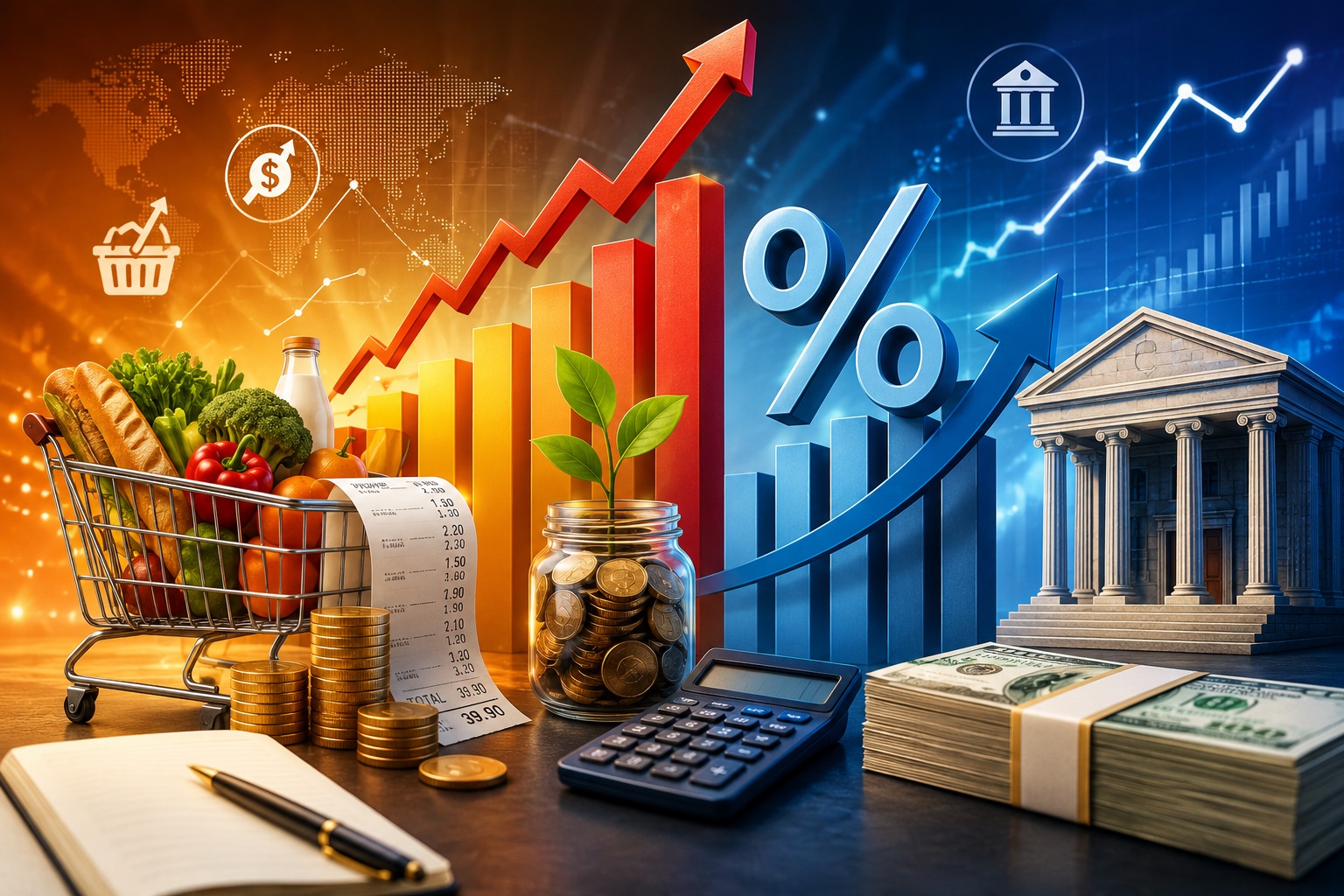
Interest rates and inflation. Every business needs cash. Things and services go up in price over time. The process is termed inflation. When inflation goes up the value of money goes down. “So you can buy less stuff for the same amount of money.” Inflation is a normal thing , but too much inflation can be bad for the economy , and can discourage saving .
Interest rates are the cost of borrowing money. These impact things such as mortgage rates, if loans are approved and the interest that is earned on savings accounts. Central banks tend to boost interest rates to combat inflation and decrease them to promote consumer and business spending and investment. When the interest rate increases, it makes the loan expensive. When it decreases, it is good for the economy and economic development.
Money is a means of buying and selling items. It makes trading easier than when individuals used to bargain .In today’s economy we use paper money , digital payments and internet banking on a regular basis. Governments and central banks control the money supply, in order to keep the economy balanced.
Money, interest rates and inflation all have sophisticated interrelationships that influence the way enterprises, customers and investors make decisions about prices, about how much they spend and about how much they invest. It is possible that living costs will rise with inflation . Changes in interest rates can also impact mortgages , savings accounts and investments . By learning about these economic basics, people will be able to make smarter money choices, stay within their budgets and plan for long-term financial security.
3. Business, Banking & Economy
The growth and prosperity of the economy is particularly crucial for business and banking. Businesses affect the economy by creating goods , offering services , creating jobs and making money. Start-ups and small businesses and large organizations all grow the economy by making things more efficient and coming up with new ideas.
Banks are the life blood of people. They help you keep your money straight.” It provides loans, bank accounts, various financial services and a variety of payment methods. Commercial banks can give loans to firms and individuals. But the Central Banks run the whole financial system and decide what the monetary policy should be. Banking services help firms employ more people, develop and trade.
A sound banking system is the backbone of a stable economy, as it allows money to move smoothly. Bank loans assist businesses purchase products such as tools, technology and strategies to run their organization. People also go to banks to help them manage their own finances, get a mortgage or obtain education loans.
Banking. Business. Economics. All hooked up. As firms grow they hire more people and people spend more money. This helps the economy and national income to flourish and improve. But bad banks or bad companies can take down the economy and cause financial calamities.
A real-life case study on business and banking can provide further insight into how economies operate, the impact of investment plans and the role of financial institutions in the growth of diverse market economies.
4. Global Economy & Development
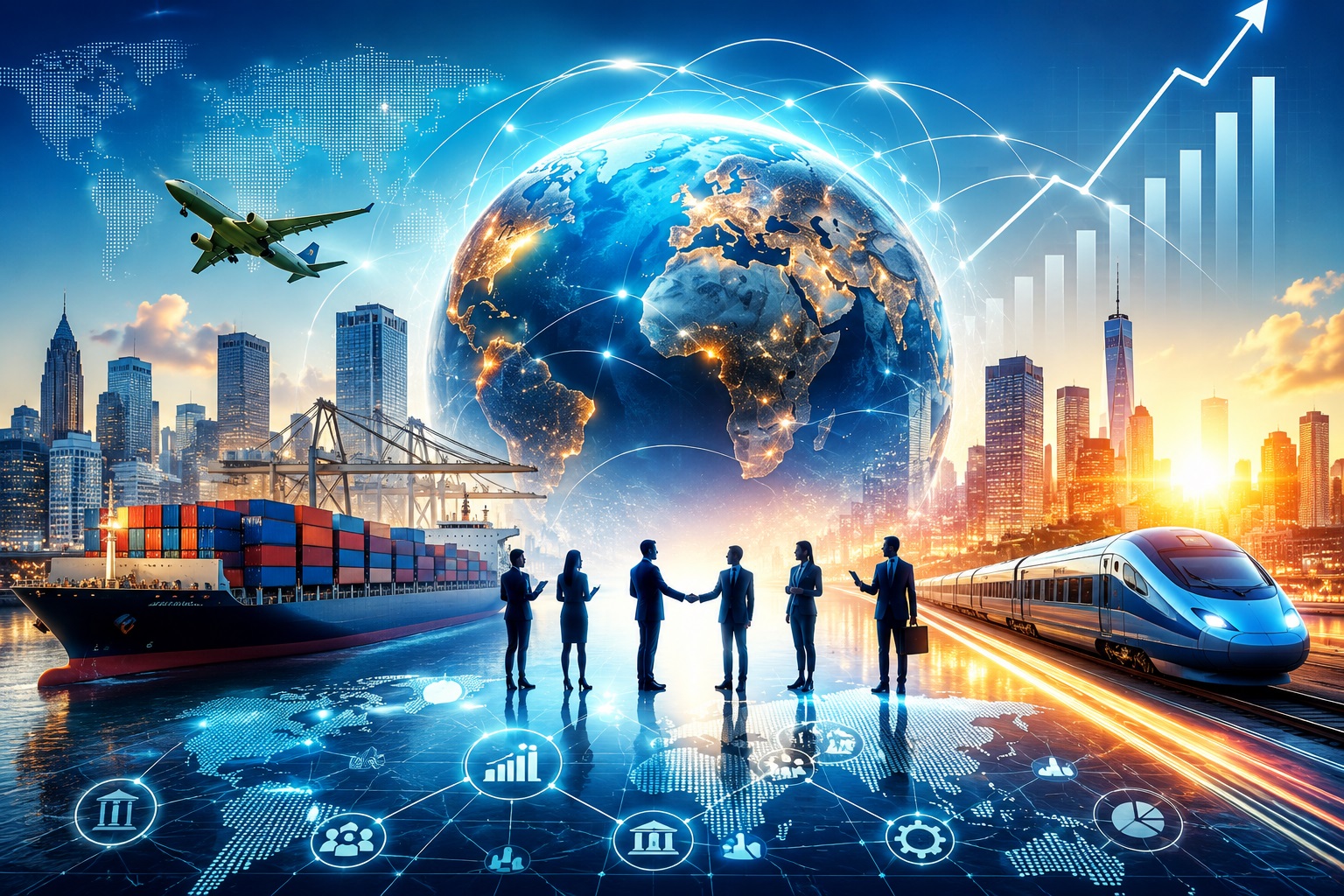
The world economy is the total of all economic activities of all countries of the globe interconnected with each other. Trade and finance, technology and financial markets, bind nations together and they also affect economic advancement. Countries trade commodities and services with each other to import resources and items they cannot create enough of on their own.
Economic collaboration across countries is facilitated by globalization. Today companies are trading all over the world and digital technology makes commerce and contact faster. As a rule, developing countries benefit from foreign financing, better infrastructure and access to the world markets. Globalisation however can also cause disadvantages such as inequality of wealth, environmental problems and dependence on one economy.
The aim of economic development is to improve the standard of living, to eliminate poverty and to sustain growth. “Governments and foreign agencies are trying to enhance things like health care, education, infrastructure and jobs. Developed countries have big companies, higher income and superior technology. But they also have challenges like income imbalance, social unfairness and environmental sustainability that show that economic advancement is not an easy process.
The International Monetary Fund (IMF), the World Bank and other institutions give financial support and economic projects to countries. Big international trade agreements, such as [Example Agreement], have helped to create collaboration between people and have enabled the growth of markets. “Cooperation is the most important factor in the development of markets and the economy,” he said.
Those who understand the global economy, whether they be people or organizations, may spot opportunities, market trends and economic challenges worldwide. But it also looks at how global events, trade policy and financial institutions affect local enterprises and daily life.
5. Economic Cycles, Crises & Future
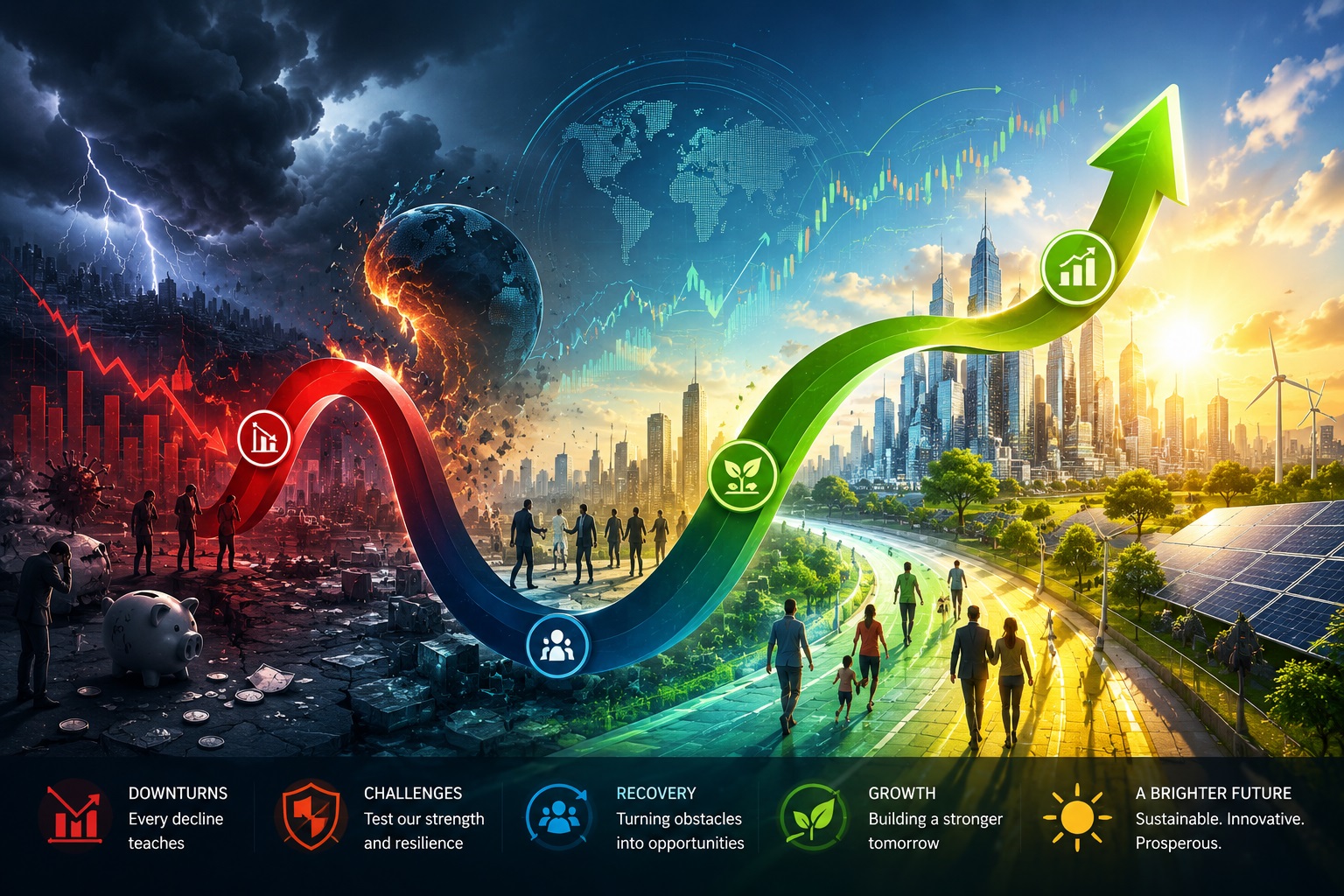
Economic cycles are the natural, periodic stages of economic activity. These phases are expansion, peak, recession and revival. As firms grow they create more jobs and individuals spend more money. Recession is when the economy slows down , production slows down , spending slows down and unemployment increases.
Economic crises may occur as a result of unstable financial systems, rising prices, bank collapses or events in surrounding nations. Crises such as the great depression and the gfc have caused huge disruptions to jobs, businesses and financial markets all around the world. This is normally a time when governments and central banks reduce interest rates and when governments and companies have more money.
Technologies, artificial intelligence, renewable energy and digital banking are just few of the aspects that will all help shape the economy of the present and the future. The expansion of internet enterprises, Bitcoin, and automation has led to people conducting their businesses, investing their money, and trading in a different manner. Another interesting element is that the countries are paying more and more attention to the environment, responsible economic policies and sustainable development.
I think innovation, education and global collaboration will be probably the primary drivers to be able to adapt and evolve with the times for the future economy. Those that can adapt with the times can expand faster especially if they can adapt to new tools and market trends. But individuals that are proactive and learn skills such as diversifying their wealth, consulting financial experts and preserving flexibility may be able to navigate economic swings, make prudent investment decisions and capitalize on career opportunities, even in the midst of uncertainty.