
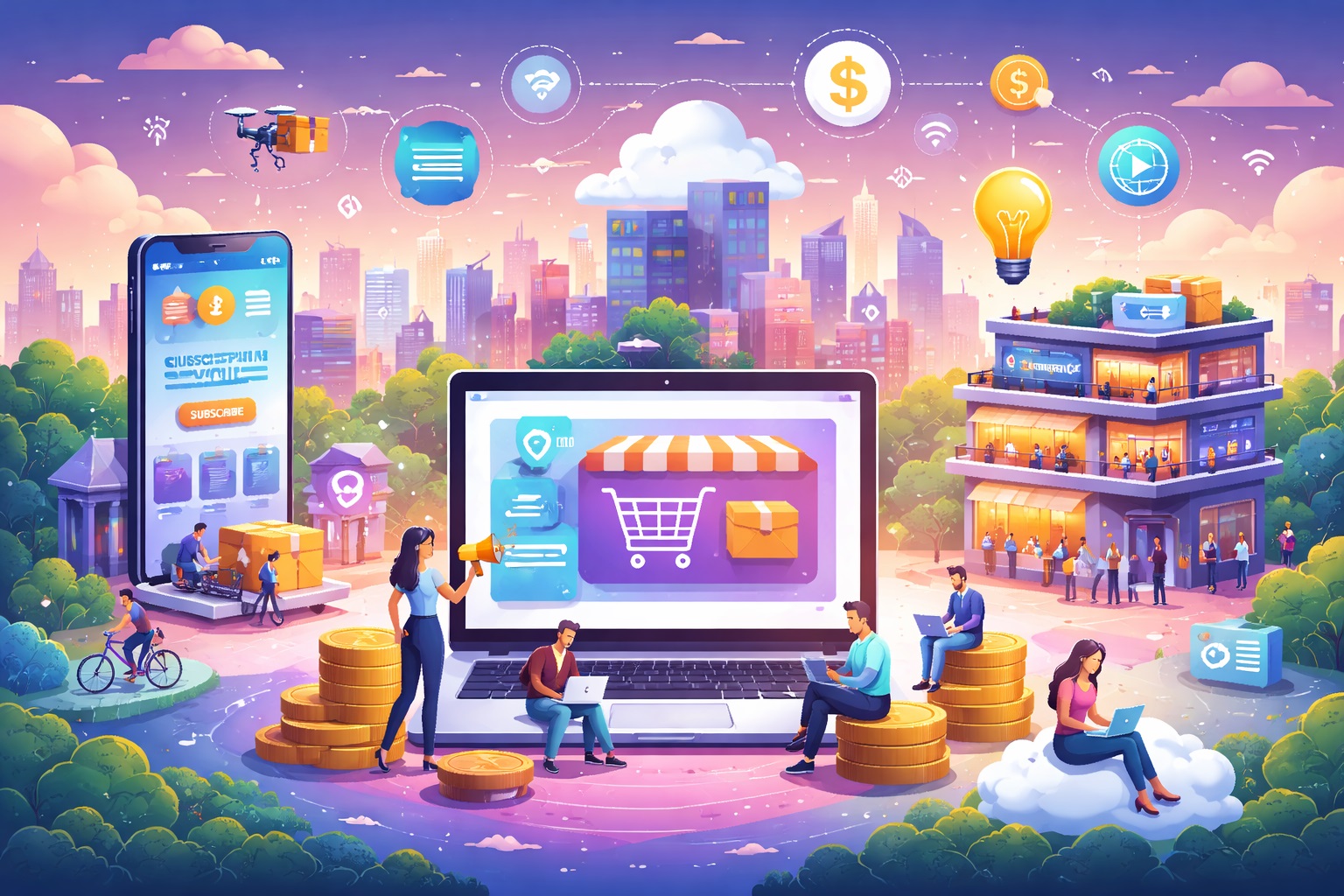
It’s important to know about digital business models in today’s fast-paced digital environment. Businesses of all sizes are moving away from conventional, brick-and-mortar tactics and toward digital-first strategies that use technology, online platforms, and new ways to make money. But how can you make sense of a digital business strategy without getting lost in all the jargon? This article explains it in clear, useful language.
A digital business model shows how a corporation makes, delivers, and benefits from value in the digital world. Digital business models are quite different from conventional business models since they depend on technology, data, and online platforms to talk to consumers, make operations more efficient, and make money.
A digital business model solves three main questions:
- How does the company provide value?
- How does the company provide that value digitally?
- How does the firm make money from or keep that value?
Businesses may use these three things to come up with new products, remain competitive by addressing client needs, and find new ways to make money online.
Why Digital Business Models Are Important
Businesses have changed because of the internet, cellphones, and cloud technologies. Digital business concepts are no longer an option; they are necessary for existence. This is why:
Global reach
Businesses can reach clients all over the globe via digital channels, therefore they don’t require physical stores.
Scalability
Digital firms may grow fast and with no extra expense compared to conventional enterprises.
Data-driven decisions
Digital models provide you access to consumer data that may help you improve your products, marketing, and prices.
Lower operational costs
Automating online operations cuts expenses for workers, physical businesses, and shipping.
Innovation opportunities
Digital models offer new ways to make money, such as subscription services and freemium models.
In short, if your firm isn’t using digital models, you might slip behind rivals that are already using technology to expand quicker and smarter.
Key Types of Digital Business Models
Digital business models are quite different from each other, depending on what they sell, what service they provide, or what industry they are in. Here are the most frequent models stated in simple words:
1. E-Commerce Model
Overview
The e-commerce model is the most common kind of online company. It means using websites, applications, or marketplaces to sell goods or services online.
For example, retailers like Amazon, Flipkart, and Shopify.
How it works
- Customers look at items online.
- They use the internet to make purchases and for payment.
- The firm brings the product or service right to the client.
Revenue Streams
Sales of products, shipping costs, and premium memberships.
Why it works
Easy to use, available all the time, and can contact people all around the world.
2. Subscription Model
Overview
With the subscription model, users pay a price every month to use a product or service for a certain amount of time.
For example, Netflix, Spotify, and Adobe Creative Cloud.
How it works
- The charge for access may be paid on a monthly or annual basis by users.
- On a consistent basis, the organization provides value in the form of information, tools, or services.
- All of the subscribers are automatically charged, which ensures that the revenue continues to flow in.
Revenue Streams
Fees for subscriptions, plans with different levels, and extra services.
Why it works
More reliable income and better connections with customers.
3. Freemium Model
Overview
With the freemium model, you may get a basic product for free, but you have to pay for other services.
LinkedIn, Dropbox, and Zoom are among examples.
How it works
- People sign up for a free version that doesn’t have all the features.
- Paid upgrades provide you more storage, advanced features, or an ad-free experience.
Revenue Streams
Subscriptions with extra features, in-app purchases, and ads.
Why it works
It gets a lot of users and turns a small number of them into paying clients.
4. Marketplace Model
Overview
A digital marketplace is a site where buyers and sellers may meet and do business. The marketplace takes a cut of the sales.
For example, eBay, Fiverr, Airbnb, and Etsy.
How it works
- The website provides sellers with the opportunity to promote their goods or services to potential customers.
- The gateway gives customers the ability to search for items, choose certain options, and eventually purchase those items.
- Additionally, the platform is entitled to a portion of the profits made from each transaction.
Revenue Streams
Fees for listings, commissions, and premium seller services.
Why it works
Scalability, a wide range of products, and network effects (more users bring in more sellers and vice versa).
5. Advertising Model
Overview
Companies make money by showing ads while giving people free information or services.
For example, Facebook, YouTube, and Google.
How it works
- Users read free stuff.
- Advertisers pay to show adverts to certain groups of people.
Revenue Streams
Ad views, clicks, paid content, and partnerships.
Why it works
A lot of people use it, and you may acquire useful data to target adverts.
6. On-Demand Model
Overview
With the on-demand approach, you may get products or services right now, generally using a mobile app.
Uber, DoorDash, and Instacart are among examples.
How it works
- People ask for services using an app.
- Providers deliver right away.
- Payments are made online.
Revenue Streams
Service fees, commissions, and surge pricing are some of the ways the company makes money.
Why it works
Real-time solutions that are easy to use and save time for busy people.
7. Data-Driven Model
Overview
Some companies make money by gathering, evaluating, and selling data insights.
Examples of these companies include Palantir, Nielsen, and services that verify your credit score.
How it works
- Information may be obtained by corporations from either people or from various devices.
- The acquisition of knowledge that is advantageous to them is the major goal that they have set for themselves.
- firms may either buy insights from other firms or utilize them to help with their own targeted marketing.
Revenue Streams
Through subscriptions, a variety of services, such as consulting, licensing, and data analytics, were made accessible to customers.
Why it works
Businesses pay for valuable information that assists them in making more informed decisions.
8. Affiliate and Partner Model
Overview
Under this strategy, companies get compensation for advertising the products or services of other companies.
Rakuten Marketing, ShareASale, and Amazon Associates are a few examples of advertising platforms.
How it works
- By use of websites, blogs, or apps, a corporation makes product recommendations.
- When customers make purchases using a referral link, the firm receives a commission on those purchases.
Revenue Streams
The company generates revenue through commissions, lead generation fees, and affiliate relationships.
Why it works: It doesn’t cost much to start, and it can grow online.
How to Choose the Right Digital Business Model
Choosing the correct model relies on a number of things, such as your target market, the sort of product you sell, your resources, and the competition. Here’s a basic guide:
Understand Your Customers
You should learn what they want, what they enjoy, and how they behave while they are online.
Identify Your Value Proposition
It is essential to ascertain the manner in which your product or service will address an issue via the use of digital tools.
Evaluate Revenue Potential
Consider the many ways in which you will generate revenue, such as via sales, subscriptions, adverts, or commissions.
Assess Operational Feasibility
Please ensure that your team and technology are able to efficiently deliver the model you have selected.
Test and Iterate
Start small, get feedback, and improve your digital company strategy as you go.
Common Challenges in Digital Business Models
Digital business models have significant potential, although they also include challenges:
Cybersecurity risks
It’s really important to keep user data safe.
Market saturation
It’s important to stand out in a lot of digital arenas since they are crowded.
Technical dependency
If systems fail, relying on platforms or technology may be dangerous.
Customer retention
Digital consumers don’t have to pay much to change, so keeping them interested is important.
Regulatory compliance
Tax and privacy rules are different in each area and need to be followed.
To make sure that digital business models are successful in the long run, you need to prepare for and deal with these problems ahead of time.
Case Studies of Successful Digital Business Models
1. Netflix (Subscription + Streaming)
Netflix changed regular TV by letting people stream shows and movies on demand for a monthly fee. This made it easier to watch a wide range of material. Its constant new ideas for unique material keep people interested and paying.
2. Amazon (E-Commerce + Marketplace)
Amazon is the best location to purchase online since it has both an e-commerce platform and a worldwide marketplace for third-party vendors. Its Prime membership brings in more money.
3. Uber (On-Demand + Platform)
Uber’s on-demand ride-sharing concept links drivers with clients via a smooth smartphone app. The company makes money by taking a cut of each trip and using network effects to expand.
4. YouTube (Advertising + Freemium)
YouTube makes money from adverts while giving consumers free content. With a premium membership, you can enjoy an ad-free experience and access to exclusive features.
Future Trends in Digital Business Models
Digital business models are always changing. Some important trends to keep an eye on are:
AI-Powered Personalization
Companies will employ AI to provide experiences, goods, and services unique to each user.
Subscription Everywhere
More industries, including vehicles and food, will start using subscription-based access.
Decentralized Platforms
Blockchain technology might make it possible for people to have greater influence over decentralized company structures.
Social Commerce
More and more, social media sites will include e-commerce features.
Sustainability Focus
To achieve customer expectations, digital enterprises will need to think about their impact on the environment and society.
Digital business models are the most important part of contemporary entrepreneurship. It’s important to know these models whether you’re selling things, supplying services, or giving out free material that makes money via adverts.
The main point is that a good digital business model makes something valuable, gets it to customers online, and makes money from it in a manner that lasts.
Businesses may do well in the digital era if they choose the correct model, deal with problems before they happen, and keep up with new trends.
To use technology to build your firm, you need adopt digital business models right now.