Global Economy and Development

c Globalization news

What Is Economic Globalization?

Economic Globalization Explained Simply It may seem hard to understand what economic globalization is, but it has a big effect on our daily life. Globalization silently shapes the modern world, from the clothes you wear and the food you consume

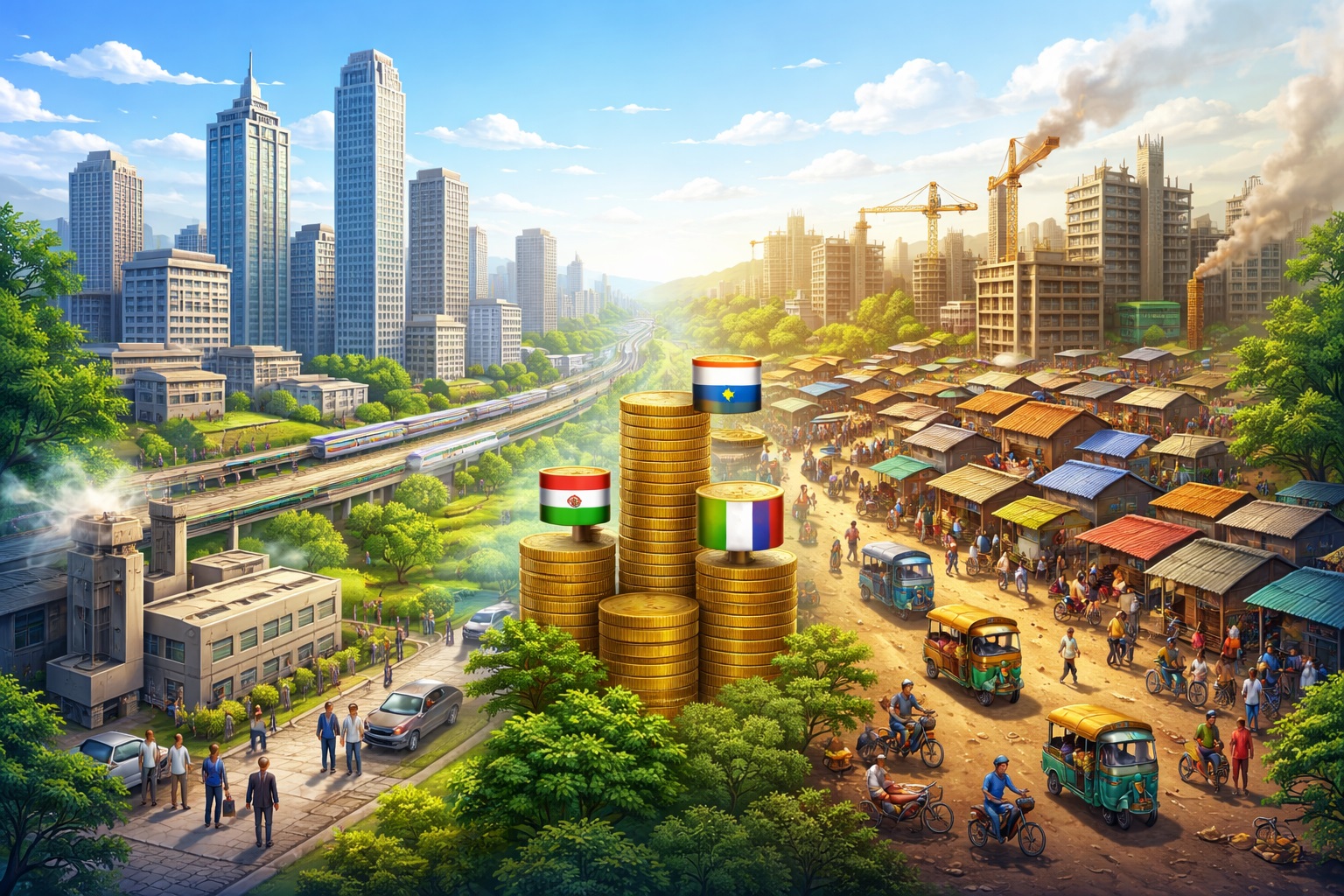
Numerous nations all around the world are now undergoing a variety of stages of economic growth and development. These stages are occurring at the present moment. When it comes to economics and politics, nations are often separated into two different categories: those with economies that are already well-established and those with economies that are progressively rising. Having an awareness of this discrepancy is absolutely necessary if you want to have a comprehension of international trade, the opportunities for investment, the levels of living, and the challenges that countries are presented with. What Are Developed Economies? Countries with developed economies, sometimes called advanced economies or high-income countries, have a high quality of living and strong economic development. These nations are noted for having stable economies, modern infrastructure, well-established institutions, and a high Human Development Index (HDI). Key Features of Developed Economies High Per Capita Income For example, the GDP per person in Switzerland and Luxembourg is more than $80,000. This makes it easier for people to get health care, go to school, and have fun. Industrialization and Technological Advancement Industrialization and technical growth have a big impact on these economies. Information technology, manufacturing, healthcare, and finance are some of the most important parts of their economies. Strong Infrastructure Developed countries put a lot of money into building and improving roads, trains, airports, and communication networks to boost commerce and make the economy run better. Stable Political and Economic Systems Governments that are stable, the rule of law, and robust financial institutions are two characteristics that are often associated with developed economies. Due to this stability, money is brought in from both inside the nation and from outside the country. High Human Development Index (HDI) The United States, Germany, and Japan have high HDI scores because their people are healthier, more educated, and earn more money. What Are Developing Economies? Developing economies, also known as emerging or low-to-middle-income countries, are countries that are becoming more industrialized and their economies are growing. They have problems like low incomes, bad infrastructure, and social inequality, but they have a lot of room to expand. Key Features of Developing Economies Low to Middle Per Capita Income Because the average GDP in developing countries is lower, people there have less access to fundamental amenities like healthcare, education, and sanitation. Agriculture-Based Economies A lot of emerging nations depend on agriculture, but their industrial and service sectors are increasing. India, Nigeria, and Indonesia are among examples. Infrastructure Challenges Roads, transportation networks, and utilities are typically not well developed, which might slow down commerce and economic progress. High Population Growth Many emerging economies are seeing their populations expand quickly. This might put a burden on resources, but it can also provide them a youthful workforce for future growth. Social and Economic Inequalities Developing countries often encounter a variety of issues, including disparities in the distribution of financial resources, disparities in educational opportunities, and restrictions on access to medical care. Getting over obstacles of this kind could prove to be very challenging. Economic Indicators: How They Differ Economists use a few important markers to tell the difference between established and developing economies: 1. Gross Domestic Product (GDP) and GDP Per Capita Developed Economies A lot of money in the GDP and GDP per person. For instance, the GDP per person in the United States is more than $70,000. Developing Economies Developing economies usually have lower GDP and GDP per person levels. For instance, India's GDP per person is around $2,500. 2. Industrialization Levels Developed Economies Developed economies have strong manufacturing and service sectors that use cutting-edge technology. Developing Economies Agriculture and raw material exports are important parts of many economies, although they are slowly shifting toward industrialization. 3. Employment Patterns Developed Economies Most people work in industry and services. Developing Economies A lot of people work in agriculture and other casual jobs. 4. Health and Education Developed Economies High literacy rates, long life expectancy, and access to healthcare are all signs of a developed economy. Developing Economies Less access to health care, lower literacy rates, and greater infant death rates. Examples of Developed and Developing Economies Developed Economies The United States Germany Japan United Kingdom Canada Australia Developing Economies India Brazil Nigeria Indonesia Mexico South Africa These examples show how different levels of wealth, infrastructure, and industrial growth are throughout the globe. Factors That Influence Economic Development Natural resources, human capital, political stability, technical innovation, and infrastructure are some of the most important things that cause the differences between established and developing economies. 1. Natural Resources Countries may be able to speed up their growth if they manage their natural resources, such oil and minerals, well. But bad management might cause the economy to stop growing. 2. Human Capital Learning new things and improving your skills are very important for the economy to prosper. Developed countries spend a lot on human capital, whereas emerging economies may have trouble getting good education for everyone. 3. Political Stability Stable governments make it easier for the economy to expand, whereas unstable governments may scare off investors and slow down progress. 4. Technological Innovation To go from a developing economy to a developed one, it is important to adopt and come up with new technology. Most of the time, developed countries are the ones that do the most research and come out with new technologies. 5. Infrastructure Good transportation, communication, and energy systems help commerce and industry thrive, which is a big part of economic growth. Challenges Faced by Developing Economies There are certain things that make it harder for developing nations to improve their economies: Poverty and Inequality High levels of poverty make it hard for people to spend money and invest in their own education. Limited Access to Education Low literacy rates hinder skilled workforce development. Healthcare Issues Poor healthcare systems make people live shorter lives and become sick more often. Corruption and Weak Institutions Corruption may take money away from important services and infrastructure projects. Debt Burdens A lot of developing countries depend on foreign loans, which makes it harder for them to engage in projects that would help them flourish. Advantages of Developed Economies Developed nations gain from their economic maturity: High Standard of Living People get better education, health care, and social security. Technological Leadership Developed economies are frequently at the forefront of new ideas and trends in business and industry throughout the world. Stable Investment Climate Political and economic stability makes people want to invest in both their own country and other countries. Strong Social Systems In developed countries, social welfare programs work well to safeguard those who are weak. How Developing Economies Can Grow There are a number of ways that emerging economies may go forward: Investing in Education and Skills A trained workforce brings in businesses and encourages new ideas. Building Infrastructure Better roads, ports, and utilities make commerce and business better. Diversifying the Economy Economies may become more stable by relying less on agriculture or basic commodities. Encouraging Foreign Investment Making the area good for business might bring in enterprises from other countries. Reducing Corruption Clear institutions make things work better and give investors more faith. Globalization and Its Impact Globalization has had different consequences on economies that are already established and those that are still developing. For industrialized countries, it has made it easier to find cheaper workers and opened up new markets. For developing countries, it has created chances for trade and international investment, but it might also make them dependent on other countries' economies. For Developed Economies Globalization lets developed economies get cheaper labor, raw commodities, and bigger markets. For Developing Economies It may lead to economic dependence, but it also opens up chances for commerce, international investment, and the transfer of technology. The Role of Technology in Bridging the Gap For instance, mobile banking has made it easier for people in poor countries to access investment possibilities and become financially included, which has helped close the development gap. Digital Economy Access to the internet and digital platforms may help people start businesses in poor countries. Mobile Banking Financial inclusion boosts investment and involvement in the economy. Renewable Energy By using eco-friendly alternatives, developing countries may skip over obsolete technology. Measuring Development: Beyond GDP GDP per capita is a typical statistic, however there are alternative ways to look at a country's development: Human Development Index (HDI) The Human Development Index (HDI) looks at things like income, life expectancy, and education. Gini Coefficient Looks at how unequal income is. Multidimensional Poverty Index Looks at how easy it is to get health care, education, and a good quality of life. These measurements provide us a better idea of quality of life than merely economic productivity. Common Misconceptions About Developing Economies All Citizens Are Poor Many individuals in emerging countries are rich or middle class, even if the average income is lower. No Industrialization Many developing nations have strong industries and new tech sectors. Slow Growth The economy of a number of emerging countries, like China and India, have seen tremendous development over the course of the previous few decades on account of sustained economic expansion. Case Studies: Success Stories 1. South Korea South Korea used to be a poor nation, but it spent a lot of money on education, technology, and infrastructure. It is now a developed economy with a strong technology and manufacturing sector. 2. China Through industrialization, foreign investment, and the adoption of new technologies, China changed from a mostly agricultural economy to the second-largest economy in the world. To comprehend how the world's economies work together, you need to know the differences between established and developing countries. People in developed countries have high standards of life, advanced technology, and stable governments. Developing nations have a lot of room to expand via investment, education, and industry, even while they face problems like poverty, inequality, and a lack of infrastructure. Globalization, technology, and smart policies are helping to close the gap between developed and developing economies in several sectors. Developing economies may speed up their growth and raise the quality of life for their inhabitants by concentrating on sustainable development, innovation, and human capital. In today's world, when everything is linked, both established and emerging economies are very important for the future of commerce, industry, and innovation throughout the globe. Governments, corporations, and people can make better choices for the economy and society if they understand how these things work. Islamic Finance and Financial Inclusion: 7+ Growth Drivers Challenges Facing Islamic Financial Institutions 11+ Issues Types of Economic Systems Explained: 11+ Powerful Models Effects of Inflations on Daily Life: 15+ Powerful Realities 7 Reasons Financial Systems Drive Economic Success

Developed vs Developing Economies

Numerous nations all around the world are now undergoing a variety of stages of economic growth and development. These stages are occurring at the present moment. When it comes to economics and politics, nations are often separated into two different

International

Role of International Trade in Growth

International commerce has a big impact on how fast economies expand in nations all over the globe. From small developing nations to large industrial economies, trade connects markets, encourages production, creates jobs, and spreads innovation. nations can’t develop on their

Global M

How Global Markets Are Connected

No economy works alone in the world today. Things that happen in one nation may swiftly spread to other countries, hurting corporations, investors, and regular people. The global market is a complicated web of commerce, money, technology, and human activity

Global Economy

How the Global Economy Works

Why the Global Economy Matters to Everyone The global economy may seem far away and hard to understand, yet it really touches practically everything we do every day. How the global economy works affects the price of food you purchase,

Numerous nations all around the world are now undergoing a variety of stages of economic growth and development. These stages are occurring at the present moment. When it comes to economics and politics, nations are often separated into two different categories: those with economies that are already well-established and those with economies that are progressively rising. Having an awareness of this discrepancy is absolutely necessary if you want to have a comprehension of international trade, the opportunities for investment, the levels of living, and the challenges that countries are presented with. What Are Developed Economies? Countries with developed economies, sometimes called advanced economies or high-income countries, have a high quality of living and strong economic development. These nations are noted for having stable economies, modern infrastructure, well-established institutions, and a high Human Development Index (HDI). Key Features of Developed Economies High Per Capita Income For example, the GDP per person in Switzerland and Luxembourg is more than $80,000. This makes it easier for people to get health care, go to school, and have fun. Industrialization and Technological Advancement Industrialization and technical growth have a big impact on these economies. Information technology, manufacturing, healthcare, and finance are some of the most important parts of their economies. Strong Infrastructure Developed countries put a lot of money into building and improving roads, trains, airports, and communication networks to boost commerce and make the economy run better. Stable Political and Economic Systems Governments that are stable, the rule of law, and robust financial institutions are two characteristics that are often associated with developed economies. Due to this stability, money is brought in from both inside the nation and from outside the country. High Human Development Index (HDI) The United States, Germany, and Japan have high HDI scores because their people are healthier, more educated, and earn more money. What Are Developing Economies? Developing economies, also known as emerging or low-to-middle-income countries, are countries that are becoming more industrialized and their economies are growing. They have problems like low incomes, bad infrastructure, and social inequality, but they have a lot of room to expand. Key Features of Developing Economies Low to Middle Per Capita Income Because the average GDP in developing countries is lower, people there have less access to fundamental amenities like healthcare, education, and sanitation. Agriculture-Based Economies A lot of emerging nations depend on agriculture, but their industrial and service sectors are increasing. India, Nigeria, and Indonesia are among examples. Infrastructure Challenges Roads, transportation networks, and utilities are typically not well developed, which might slow down commerce and economic progress. High Population Growth Many emerging economies are seeing their populations expand quickly. This might put a burden on resources, but it can also provide them a youthful workforce for future growth. Social and Economic Inequalities Developing countries often encounter a variety of issues, including disparities in the distribution of financial resources, disparities in educational opportunities, and restrictions on access to medical care. Getting over obstacles of this kind could prove to be very challenging. Economic Indicators: How They Differ Economists use a few important markers to tell the difference between established and developing economies: 1. Gross Domestic Product (GDP) and GDP Per Capita Developed Economies A lot of money in the GDP and GDP per person. For instance, the GDP per person in the United States is more than $70,000. Developing Economies Developing economies usually have lower GDP and GDP per person levels. For instance, India's GDP per person is around $2,500. 2. Industrialization Levels Developed Economies Developed economies have strong manufacturing and service sectors that use cutting-edge technology. Developing Economies Agriculture and raw material exports are important parts of many economies, although they are slowly shifting toward industrialization. 3. Employment Patterns Developed Economies Most people work in industry and services. Developing Economies A lot of people work in agriculture and other casual jobs. 4. Health and Education Developed Economies High literacy rates, long life expectancy, and access to healthcare are all signs of a developed economy. Developing Economies Less access to health care, lower literacy rates, and greater infant death rates. Examples of Developed and Developing Economies Developed Economies The United States Germany Japan United Kingdom Canada Australia Developing Economies India Brazil Nigeria Indonesia Mexico South Africa These examples show how different levels of wealth, infrastructure, and industrial growth are throughout the globe. Factors That Influence Economic Development Natural resources, human capital, political stability, technical innovation, and infrastructure are some of the most important things that cause the differences between established and developing economies. 1. Natural Resources Countries may be able to speed up their growth if they manage their natural resources, such oil and minerals, well. But bad management might cause the economy to stop growing. 2. Human Capital Learning new things and improving your skills are very important for the economy to prosper. Developed countries spend a lot on human capital, whereas emerging economies may have trouble getting good education for everyone. 3. Political Stability Stable governments make it easier for the economy to expand, whereas unstable governments may scare off investors and slow down progress. 4. Technological Innovation To go from a developing economy to a developed one, it is important to adopt and come up with new technology. Most of the time, developed countries are the ones that do the most research and come out with new technologies. 5. Infrastructure Good transportation, communication, and energy systems help commerce and industry thrive, which is a big part of economic growth. Challenges Faced by Developing Economies There are certain things that make it harder for developing nations to improve their economies: Poverty and Inequality High levels of poverty make it hard for people to spend money and invest in their own education. Limited Access to Education Low literacy rates hinder skilled workforce development. Healthcare Issues Poor healthcare systems make people live shorter lives and become sick more often. Corruption and Weak Institutions Corruption may take money away from important services and infrastructure projects. Debt Burdens A lot of developing countries depend on foreign loans, which makes it harder for them to engage in projects that would help them flourish. Advantages of Developed Economies Developed nations gain from their economic maturity: High Standard of Living People get better education, health care, and social security. Technological Leadership Developed economies are frequently at the forefront of new ideas and trends in business and industry throughout the world. Stable Investment Climate Political and economic stability makes people want to invest in both their own country and other countries. Strong Social Systems In developed countries, social welfare programs work well to safeguard those who are weak. How Developing Economies Can Grow There are a number of ways that emerging economies may go forward: Investing in Education and Skills A trained workforce brings in businesses and encourages new ideas. Building Infrastructure Better roads, ports, and utilities make commerce and business better. Diversifying the Economy Economies may become more stable by relying less on agriculture or basic commodities. Encouraging Foreign Investment Making the area good for business might bring in enterprises from other countries. Reducing Corruption Clear institutions make things work better and give investors more faith. Globalization and Its Impact Globalization has had different consequences on economies that are already established and those that are still developing. For industrialized countries, it has made it easier to find cheaper workers and opened up new markets. For developing countries, it has created chances for trade and international investment, but it might also make them dependent on other countries' economies. For Developed Economies Globalization lets developed economies get cheaper labor, raw commodities, and bigger markets. For Developing Economies It may lead to economic dependence, but it also opens up chances for commerce, international investment, and the transfer of technology. The Role of Technology in Bridging the Gap For instance, mobile banking has made it easier for people in poor countries to access investment possibilities and become financially included, which has helped close the development gap. Digital Economy Access to the internet and digital platforms may help people start businesses in poor countries. Mobile Banking Financial inclusion boosts investment and involvement in the economy. Renewable Energy By using eco-friendly alternatives, developing countries may skip over obsolete technology. Measuring Development: Beyond GDP GDP per capita is a typical statistic, however there are alternative ways to look at a country's development: Human Development Index (HDI) The Human Development Index (HDI) looks at things like income, life expectancy, and education. Gini Coefficient Looks at how unequal income is. Multidimensional Poverty Index Looks at how easy it is to get health care, education, and a good quality of life. These measurements provide us a better idea of quality of life than merely economic productivity. Common Misconceptions About Developing Economies All Citizens Are Poor Many individuals in emerging countries are rich or middle class, even if the average income is lower. No Industrialization Many developing nations have strong industries and new tech sectors. Slow Growth The economy of a number of emerging countries, like China and India, have seen tremendous development over the course of the previous few decades on account of sustained economic expansion. Case Studies: Success Stories 1. South Korea South Korea used to be a poor nation, but it spent a lot of money on education, technology, and infrastructure. It is now a developed economy with a strong technology and manufacturing sector. 2. China Through industrialization, foreign investment, and the adoption of new technologies, China changed from a mostly agricultural economy to the second-largest economy in the world. To comprehend how the world's economies work together, you need to know the differences between established and developing countries. People in developed countries have high standards of life, advanced technology, and stable governments. Developing nations have a lot of room to expand via investment, education, and industry, even while they face problems like poverty, inequality, and a lack of infrastructure. Globalization, technology, and smart policies are helping to close the gap between developed and developing economies in several sectors. Developing economies may speed up their growth and raise the quality of life for their inhabitants by concentrating on sustainable development, innovation, and human capital. In today's world, when everything is linked, both established and emerging economies are very important for the future of commerce, industry, and innovation throughout the globe. Governments, corporations, and people can make better choices for the economy and society if they understand how these things work. Islamic Finance and Financial Inclusion: 7+ Growth Drivers Challenges Facing Islamic Financial Institutions 11+ Issues Types of Economic Systems Explained: 11+ Powerful Models Effects of Inflations on Daily Life: 15+ Powerful Realities 7 Reasons Financial Systems Drive Economic Success

Developed vs Developing Economies

Numerous nations all around the world are now undergoing a variety of stages of economic growth and development. These stages are occurring at the present moment. When it comes to economics and politics, nations are often separated into two different

Global M

How Global Markets Are Connected

No economy works alone in the world today. Things that happen in one nation may swiftly spread to other countries, hurting corporations, investors, and regular people. The global market is a complicated web of commerce, money, technology, and human activity

International

Role of International Trade in Growth

International commerce has a big impact on how fast economies expand in nations all over the globe. From small developing nations to large industrial economies, trade connects markets, encourages production, creates jobs, and spreads innovation. nations can’t develop on their

c Globalization news

What Is Economic Globalization?

Economic Globalization Explained Simply It may seem hard to understand what economic globalization is, but it has a big effect on our daily life. Globalization silently shapes the modern world, from the clothes you wear and the food you consume

Global Economy

How the Global Economy Works

Why the Global Economy Matters to Everyone The global economy may seem far away and hard to understand, yet it really touches practically everything we do every day. How the global economy works affects the price of food you purchase,

1. How the Global Economy Works

On the world market people from different parts of the world can purchase and sell goods, use technology, invest money in each other’s countries. International economic linkages are forged when countries trade with each other. Companies sell to people in lots of nations. The laws nations establish effect markets all over the world. There are also people, corporations and banks that aid the international economy. The performance of an economy is determined by the number of jobs, the rate of inflation and the value of the currency.

When countries can do more items and services more efficiently, the world economy grows. Technology and travel have given countries more opportunities to communicate with each other than ever before. Those who understand how the world economy works may have a better understanding of international business, firm opportunities and economic growth around the world.

2. Economic Globalization Explained Simply

Economic globalization is the coming together of the economies of the world. Trade, Investment, Technology, and Information. Businesses market their products worldwide. Countries require each other’s products and services. Globalization enables enterprises to reach more customers and sources of supplies at a lower cost. It also brings jobs and new ideas and economic progress. However, globalization can also mean increased competitiveness and economic inequality in some parts of the world.

The internet and the introduction of modern automobiles have hastened the pace at which economies across the globe transact business. Trade and business with other countries is beneficial for developing countries. Economic globalization has changed the connection between companies, money, and trade. This phenomenon has increased the number of connections in the world economy and causes countries to collaborate to remain stable.

3. Developed vs Developing Economies

A developed economy is one that has high wealth, modern industry, and good infrastructure. For example, the United States, Germany, and Japan. These countries also tend to have better systems of health care, education, and technology. Emerging countries are still developing their businesses and lifestyles. Economies such as India and Pakistan continue to show rapid growth.

The majority of them are poor and unemployed and the amenities are equally poor. But many undeveloped countries are proceeding with industrialization with the help of other countries. Understanding the difference between developed and developing economies helps us understand global trade , economic inequality , and efforts to raise living standards worldwide .

4. Role of International Trade in Growth

Trade is a way for countries to grow by selling goods and services to other markets. Exports offer more money for the company, more jobs, and more government revenue. Imports allow countries to get goods, technologies, and resources that are not present in their own countries. Trade makes a company more competitive, more innovative, and more productive. Many countries improve their economies by focusing on what they can do well.

Free trade agreements allow countries to cooperate on their economies. The trade between the countries makes the connection between them and the possibility of making investments. “Demand from other countries and export businesses is particularly good for developing economies. International trade is a driving force for economic, industrial, and financial progress around the world, as seen by the rise of global corporations such as Amazon and Alibaba.

5. How Global Markets Are Connected

Markets are linked via trade, finance, technology and information systems. Nations, corporations, banks and stock markets talk to each other every day. When things go wrong in a big country (say the US) then it can have big consequences for markets all around the world. It can influence stock prices, currency exchange rates and investor confidence. A rise in the price of oil or a financial crisis, for example, might have repercussions both in industry and trade around the world. multinational firms Firms that operate in several countries.

This process links the economies of different areas in the world. Currency exchange rates and international banking systems also connect the world’s financial markets. Corporations and investors can modify present technologies to economically favorable swings at the same time. This link in the economy is good for growth, but it also brings dangers to the planet. Knowing the connections in the global market will help you understand global economic patterns and the business that occurs across countries.

6. Impact of Global Events on Economies

Wars, pandemics and other worldwide calamities can cause recessions, influence global trade and damage national and international economies, as seen by the global financial crisis of 2008 and the global COVID-19 pandemic of 2020. War, pandemics, natural disasters and financial crises continue to affect trade, tourism and investment. The COVID-19 pandemic shuttered businesses, destroyed jobs, stalled economies worldwide. Market could be weighed by political tensions, higher energy costs. Climate change disasters harm agriculture, companies and buildings.

Pricing and buyer confidence are influenced by events occurring worldwide. Governments and central banks usually try to mitigate the ill impacts using economic measures. When significant changes occur in the globe, some industries will make money and some will lose money. Knowing how global events affect their economies helps countries better plan for future crises and strengthen their economies.

7. Economic Development Explained

The purpose of economic growth is to raise a country’s income, level of living and general quality of life. That means doing more. Putting people to work. Ending poverty. Making education and health care better. Economic growth is not only economic advancement, it is also social development. Power grids, transit systems etc. are generally government undertakings. health care, education and other key sectors. It aims to develop the economy and raise the living standard of its people.

And strong systems and stable administrations are also needed by growing economies. Investment and reforms of developing countries improve the circumstances of enterprises and workers. Sustainability indicates that the economic opportunities of future generations will be kept. This is a terrific method to aid developing economies, make the globe a better place to live and minimize injustice.”

8. How Countries Measure Economic Progress

One way to think about a country’s economy is by looking at how healthy what it produces (GDP) is, how many jobs exist, how much prices have changed (inflation), and how wealth is shared among its people. GDP is the total value of goods and services generated by a country. Usually, a healthy economy is one where the GDP is increasing swiftly. Governments tend to look at unemployment levels to get a sense of the job market and how they might create jobs. The inflation rate measures the change in prices over time.

Other metrics of human advancement, such as life expectancy, education, and health care, are also essential. The Human Progress Index (HDI) is an indicator that experts use to measure a country’s economic and social progress. These indicators can be used by governments and organizations to measure the health of the economy and to formulate plans for future growth and stability.

9. Role of Foreign Investment in Development

Growth is driven by foreign investment. It helps support local jobs, infrastructural upgrades and firm transformation. “States that welcome foreign investment grow economically and get new ideas. Multinational firms develop factories, infrastructure and other sectors to expand overseas. “The investment is helping to lift up enterprises and provide employment for local people in developing economies.” Foreign owners can provide new management and technical capabilities that increase output.

Foreign direct investment is encouraged by governments because it can yield tax benefits and economic growth. Global corporations are attracted to a country with a solid investment climate. It helps the economy. They need to make smart investments. They can defend their industry and country. Foreign investment increases world industry, trade and long-term growth.

10. How International Organizations Affect Economies

World Commerce Organization is a body that resolves commercial disputes and sets standards. The World Bank provides financing and technical assistance to developing countries. The IMF works to maintain global financial stability, to give policy advice, and to provide emergency assistance. These categories are economies throughout the world. The International Monetary Fund , World Bank and WTO help countries cooperate on economic concerns . These institutions provide loans, advice and encouragement to struggling economies. They write the international trade regulations that increase competitiveness and growth.

International organizations often provide emergency funds and guidance on how to operate their economies to countries in financial trouble. Those who disagree argue that foreign groups have too much power in national policies. But there are obstacles. International institutions are still relevant for economic stability, world trade and global growth.”

11. Economic Inequality Explained

Economists use the term inequality to describe that not everyone has the same amount of money, wealth or opportunity. Money and healthcare and schooling function better for some people and some areas than other people and places. Among mankind. Among groupings. Among governments. You say it. Fast economic growth doesn’t necessarily benefit everyone. Unemployment, low income and a lack of access to schools often promote inequality.

A big gap between rich and poor makes everyone worse off and it makes it harder for people to improve their financial situation. Governments use measures like taxation, social benefits, school programs to narrow the gap of incomes. Reducing economic inequality, strengthening the stability of society, improving standards of life, and providing everyone with equal economic opportunity are significantly dependent on progressive taxes, welfare measures, and reforming schools.

12. Poverty and Economic Development

Poverty is related to economic development. Poor people are deprived of education, health and work and this affects economic advancement. Poor countries with large numbers of poor people probably have poor infrastructure and low productivity. Poverty declines with economic growth. It creates more jobs, raises earnings and improves public services. The government and foreign agencies provide health care, education and social services to help low-income populations.

Economic growth that is sustainable makes people’s lives better over time. It’s good for business when consumers have more discretionary spending money. Eliminate poverty. Ultimately, successful development policies lead to a stable economy, bringing people together and giving everyone equitable chances to enhance the lives of future generations.

13. Role of Education in Economic Growth

Good education is very crucial for economic progress. It boosts people’s talents and productivity. A well-educated populace allows a company to flourish with technology and new ideas. Countries with better education systems tend to have better economic growth and prosperity. Education is the key to getting better jobs and raising their standard of living. It also aids in eliminating poverty and helps people to climb the social ladder.

Governments spend in schools, universities and training for jobs to create human capital. Knowledge, digital skills and study are more crucial for the development of modern economy. Education encourages innovation and entrepreneurship and the establishment of businesses. Education is one of the most important factors for the long-term success of countries.

14. Sustainable Economic Development Explained

Sustainable economic growth is a process of economic development, saving the environment and natural resources for next generations. It seeks a balance between environmental responsibility, commercial success, and social growth. Companies and governments are investing in clean technology, renewable energy, and eco-friendly ways of producing things to help foster sustainability. Fair wages, social equality, and protection of resources are the meaning of sustainable growth.

Long-term problems may be pollution and climate change, caused by the economic activity that destroys the environment. Such sustainable measures can therefore lead to economic growth without harming ecosystems. To achieve their global sustainable development goals, countries must cooperate. Green economic growth means respectable jobs, a healthy society, and better lifestyles for our future generations.”

15. Economic Impact of Climate Change

Climate change profoundly affects numerous countries and organizations around the world and their economies. Storms, floods, droughts, and higher temperatures threaten industry, agriculture, and infrastructure. Many economies are based on agriculture and natural resources and hence are subject to environmental change. Climate disasters can reduce the potential output of the economy and increase government spending on reconstruction. Insurance and energy can become more expensive owing to climate change issues.

In other areas, however, climate investments are beneficial, e.g., green technologies, alternative energy. Governments are establishing environmental rules to reduce carbon emissions and to promote long-term growth. “It’s critical to understand how the economy responds to climate change in order to craft legislation that results in both environmental protection and the long-term stability of the economy.”

16. Green Economy Explained

The green economy is designed to sustain the economy while protecting the earth and securing natural resources. It promotes recycling, renewable energy and green technology. Companies and governments are investing vast amounts of cash into renewable energy sources like wind and solar to minimize pollution and carbon emissions. A green economy is one that provides more jobs and more opportunities in the green industry.

Many governments want residents to invest their money in “green” investments to combat climate change and make people healthier. Green economic policies are also concerned with the sustainability of agriculture, transport, and industry. A green economy is an economy that conserves ecosystems and supports sustainable economic growth and environmental stewardship for the current and future generations.

17. Digital Transformation and the Economy

The world economy is being driven by a “digital transformation” through technology, robots and services on the Internet. Companies are harnessing digital technologies for better customer communication, operational efficiency and consumer satisfaction. E-commerce, e-banking and e-payment has revolutionized the way money is treated throughout the world. The tech corporations connect individuals around the world, creating employment and businesses. Another set of technologies that help running a business easier includes data analysis, cloud computing, and AI.

But the shift to digital could make some routine tasks redundant and increase the demand for those with a lot of talents. States that invest in digital infrastructure and internet access see their economies grow. Today many areas are changing because of digital advancements which make overseas trade easier and create new company prospects.

18. Economic Challenges Facing the World

The international economy is being damaged by unemployment, inflation, debt, climate change and socioeconomic disparities. When prices are high, it is tougher to buy for consumers and businesses. They are truly in debt and not making money on their businesses”. Trade wars and World conflicts effect energy supplies and marketplaces all over the World. Climate change is making natural disasters and environmental degradation more costly and more frequent.

Developing economies often have poverty, weak infrastructure, and minimal investment opportunities. Improvements in technology can also make jobs less secure in other areas. Governments and international organizations are joining forces to tackle the key economic challenges the world is facing, to maintain the balance, and to help them to grow sustainably.

19. How Emerging Economies Grow

Growth of emerging countries is based on industrialization, investment, trade, and technological improvement. In the last decades, the economies of countries like China, Brazil, and Indonesia have expanded pretty quickly. They have rising consumer markets and cheaper manufacturing costs, which tends to attract international investment. Growth is driven by better infrastructure, schools, and corporate practices. The establishment of manufacturing and export businesses will create jobs and increase the national GDP.

Governments encourage people to look for new ways of innovation and to start their own enterprises to improve the economic performance. But growing economies have to overcome difficulties such as rising prices, political upheaval and inequality. The economy can grow and improve over time with the implementation of robust policies and collaboration with other nations.

20. Future of the Global Economy

The future of the international economy will be things like commerce, technology, sustainability and changes in population. Worldwide many enterprises and environments are being transformed by digital innovation, AI and automation. The government will act on climate change and green energy and corporate techniques will be more important. Emerging economies will have a greater role in international trade and business.

Financial crises, health catastrophes, and environmental problems will still have to be tackled in cooperation amongst countries. Competition and the influence of the economy of the main countries on the world markets. Companies and governments need to adapt to these developments to stay ahead of emerging technologies and client expectations. “In the end it will be good for the future of the international economy, for innovation, resilience, and long-term economic growth.

Scroll to Top