
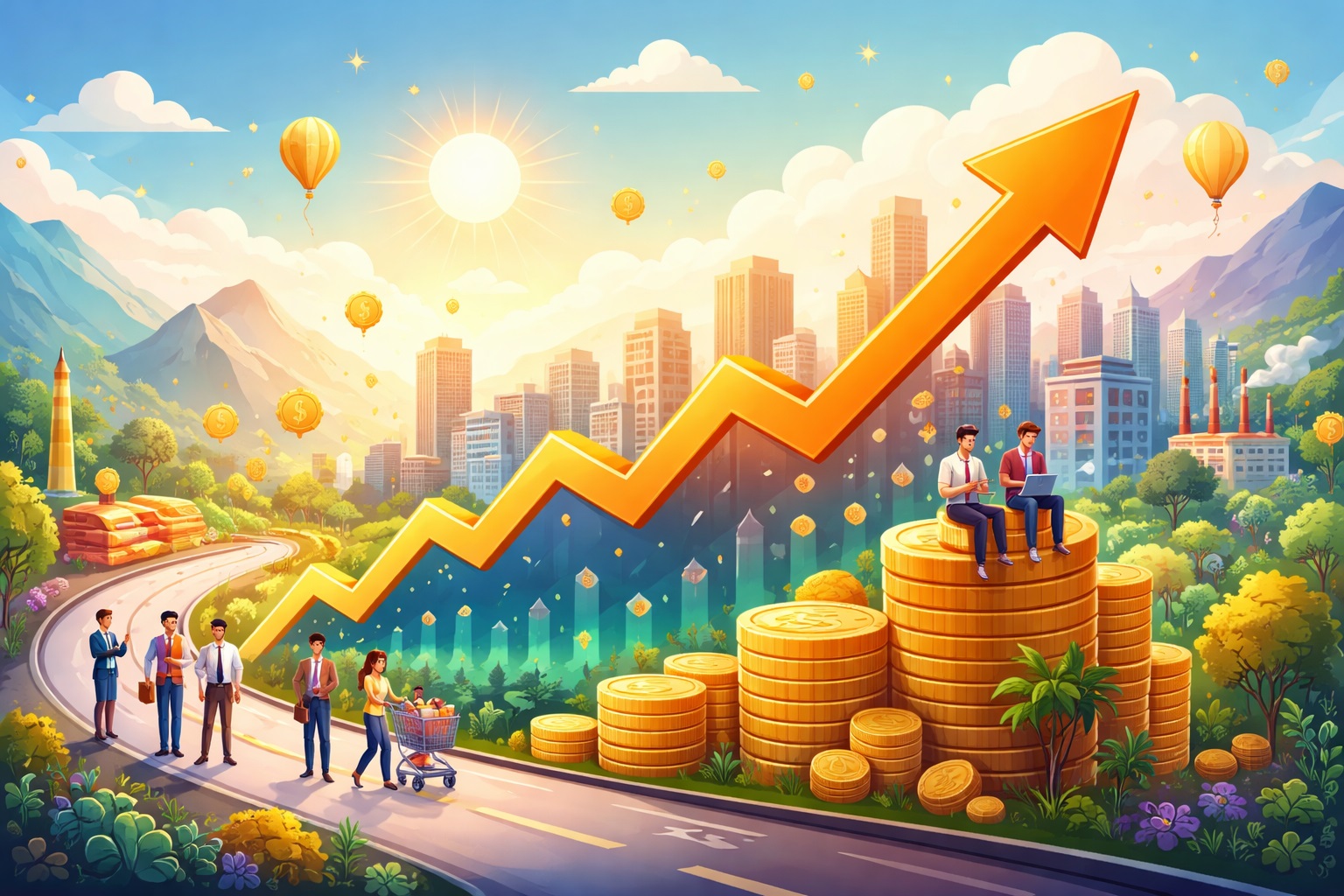
Why Economic Cycles Matter to Everyone
Have you ever thought about why jobs are simple to get, companies develop quickly, and people spend money easily at certain times, while at other times, layoffs go up, prices go up, and everyone looks apprehensive about the future? Economic cycles are not random; they follow a set pattern. They are part of a pattern that happens again and over again, called economic cycles.
Economic cycles affect diverse populations in different ways, including students, workers, company owners, investors, and lawmakers. Even if you have never studied economics, the ups and downs of the economy affect your everyday life in little ways. They affect how much money you make, how safe your work seems, how much groceries cost, and whether it is a good moment to save, spend, or invest.
What Is an Economic Cycle?
The natural rise and fall of economic activity over time is called an economic cycle. It talks about how an economy goes between times of growth and times of decline.
Think of the economy like a heart:
- The economy is booming when it beats hard and rapidly.
- The economy is having a hard time when it slows down.
Economic cycles go through a pattern of expansion and decay. Economies don’t keep growing forever, and they don’t remain in decline forever either. They go through cycles instead.
An economic cycle indicates, in basic terms:
- What people are making
- How much money they are spending
- How many individuals are on the job
- How sure companies and customers are
Why Do Economic Cycles Exist?
Economic cycles happen when there is an imbalance between how people act, how money moves about, and how resources are used. People’s choices are affected by feelings like fear, confidence, hope, and doubt. These feelings affect how much you spend, save, and invest.
Here are some important reasons why economic cycles happen:
1. Human Behavior and Psychology
People spend more when they feel good about themselves. They save more when they don’t know what to do. These choices made by groups may make the economy go up or down.
2. Business Investment Patterns
During good times, businesses put a lot of money into things. When earnings go down, they reduce expenses and put off growth, which slows down the economy.
3. Credit and Debt
Loans that are easy to get encourage people to spend and expand. When debt becomes too high, people stop borrowing money, and the economy slows down.
4. Government Policies
Changes in taxes, government expenditure, and interest rates may make the economy go faster or slower.
5. External Shocks
Wars, pandemics, natural catastrophes, and energy shortages may all stop economic activity without warning.
The Four Main Phases of an Economic Cycle
There are four fundamental parts to every economic cycle. It is much simpler to understand the whole idea if you know these steps.
Phase 1: Expansion (Growth Phase)
What Happens During Expansion?
During the expansion phase, the economy is becoming better and rising. This is the part that people like the best.
During growth:
- Companies produce more products and services
- Businesses recruit more people
- Wages usually go up
- People spend more money
- There is a lot of trust.
Usually, a rise in the Gross Domestic Product (GDP) shows that the economy is growing at this time.
How It Feels in Everyday Life
During growth:
- It’s easy to get a job now.
- Companies open new locations
- People purchase gadgets, automobiles, and houses.
- Banks give out additional loans.
People are hopeful about what will happen in the future. Most of the time, news headlines are good, and the stock market does well.
Why Expansion Cannot Last Forever
As things keep becoming bigger:
- Prices can start to go up too rapidly
- Businesses could borrow too much
- The economy uses up all of its resources.
The economy eventually gets to a point where it stops growing.
Phase 2: Peak (The High Point)
What’s the Peak?
The peak is the maximum level of economic activity before growth begins to go down. It shows the change from growth to decrease.
At the top:
- There are a lot of jobs available
- Production is close to its highest level.
- People have a lot of faith in the economy
- Inflation might go up.
Why the Peak Is Hard to Identify
Usually, the peak is found after the economy has already started to go down. Everything still seems nice on the surface at the moment.
A lot of individuals think that the peak means long-term wealth. This false sense of security might make the following step hurt worse.
Phase 3: Contraction (Recession Phase)
What Happens During Contraction?
During contraction, the economy starts to slow down. A recession occurs when the economy goes down a lot and stays down for a long time.
During contraction:
- Companies cut down on output
- Businesses let staff go
- People spend less money
- Profits go down
- Trust goes down
Signs of a Recession
Some common indicators are:
- Unemployment is going up
- Business income is going down
- Less money to invest
- Wage growth is slower
People become careful. People spend more on things they need than on things they want.
Emotional Impact of Contraction
People frequently feel scared and unsure at this period. People are worried about their jobs, their debts, and how much money they will make in the future. Companies put off plans to hire more people and grow.
Phase 4: Trough (The Lowest Point)
What Is the Trough?
The trough is the lowest point in the economy’s cycle. It signals the end of the contraction and the start of the recuperation.
At the bottom:
- The economy is at its lowest right now
- There are a lot of people out of work.
- There isn’t much confidence.
Why the Trough Is Important
The trough is a very important time, even if it has bad meanings. The economy begins to get better slowly at this moment.
Companies begin to adapt to the new situation, expenses level off, and chances for growth come again.
Recovery and the Start of a New Cycle
After the lowest point, the economy starts to recover, which leads to growth again. This represents the end of one entire economic cycle and the start of another.
When does recovery happen?
- Slowly, spending goes up
- Companies are recruiting again
- Slowly, confidence comes back.
This process might take a long time, but it sets the stage for development in the future.
How Long Do Economic Cycles Last?
There is no set timeline for economic cycles. Some stay for a few years, while others last for decades.
Things that affect the duration of a cycle are:
- Policies of the government
- The state of the world economy
- Stability of the financial system
- Changes in technology
There is no perfect formula, which is why economic cycles are hard to anticipate.
Different Types of Economic Cycles
There are several kinds of economic cycles. There are a few different sorts that economists talk about:
1. Business Cycles
These are the most prevalent and have to do with changes in economic activity during the short to medium term.
2. Financial Cycles
These are about the expansion of credit, the pricing of assets, and the amount of debt.
3. Long-Term Economic Cycles
These cycles are affected by big changes like the industrial revolution or digital technologies.
The economy is affected in various ways by each category.
How Economic Cycles Affect Ordinary People
Economic cycles are not merely ideas that aren’t real. They have a direct effect on everyday life.
Employment
- Jobs are created by growth
- Contraction makes unemployment go up.
Income
- During good times, wages increase up.
- During downturns, income stays the same or goes down.
Cost of Living
- Prices can go up when things get better.
- During contraction, prices may go down or rise more slowly.
Mental and Social Effects
Stress from money problems may affect your mental health, your family life, and how you act around other people.
How Economic Cycles Affect Businesses
Businesses are very affected by changes in the economy.
During Expansion
- More sales
- Profits go up
- Investment goes up
During Contraction
- The demand goes down
- Costs must be kept in check
- Some companies could go out of business.
Instead of depending on constant development, successful firms plan for cycles and change their tactics when they happen.
Role of Government in Economic Cycles
Governments work to make economic cycles less severe.
Fiscal Policy
Governments change:
- Taxes
- Spending by the government
Governments generally spend more money during recessions to boost demand.
Monetary Policy
Central banks have an effect on:
- Rates of interest
- Supply of money
Lower interest rates make it easier to borrow and spend money during bad times.
Can Economic Cycles Be Prevented?
It is not possible to entirely get rid of economic cycles. They happen because of how people act and how complicated the economy is.
But you may lessen their effect by:
- Strong rules for money
- Lending with care
- Policies that are smart for the government
The objective is not perfection, but steadiness.
Can Economic Cycles Be Predicted?
It’s quite hard to anticipate when the economy will go up and down.
Economists use:
- Trends in data
- Job numbers
- Rates of inflation
- Trust in consumers
Even with the best technologies, it’s still hard to know exactly when things will happen. This is why it’s better to be ready than to guess.
How Individuals Can Prepare for Economic Cycles
You don’t have to manage the economy to keep yourself safe.
Practical Steps
- Save money for emergencies
- Stay away from too much debt
- Make long-term investments
- Learn new things and become better at what you do.
If you’re ready for financial problems, they won’t hurt as much.
Common Myths About Economic Cycles
Myth 1: Recessions Mean Total Collapse
In reality, recessions are typical parts of cycles and don’t last long.
Myth 2: Growth Never Ends
The truth is that every growth ultimately slows down.
Myth 3: Only Governments Cause Cycles
Cycles are caused by numerous things, such as how people behave and what happens across the world.
Why Understanding Economic Cycles Is Important
Knowing about economic cycles may benefit you:
- Make smarter choices about money
- Don’t panic when things go wrong.
- Recognize chances during recovery
- Set realistic long-term objectives
Understanding lowers fear and boosts confidence.
Economic Cycles and the Future
Today’s economies are more linked than ever before. Technology and globalization may spread economic shocks more quickly, but they can also help economies recover more quickly.
Even while economic cycles will always happen, smart people and proactive policies may lessen their bad effects.
Economic Cycles Made Simple
The world we live in is shaped by natural cycles of expansion and decrease in the economy. People’s actions, corporate choices, government rules, and things that happen unexpectedly all affect them.
By knowing:
- The four steps
- The reasons
- The effects
You become clearer and more in charge of how you react to changes in the economy.
It’s hard to understand, plan for, and deal with economic cycles in a smart way.