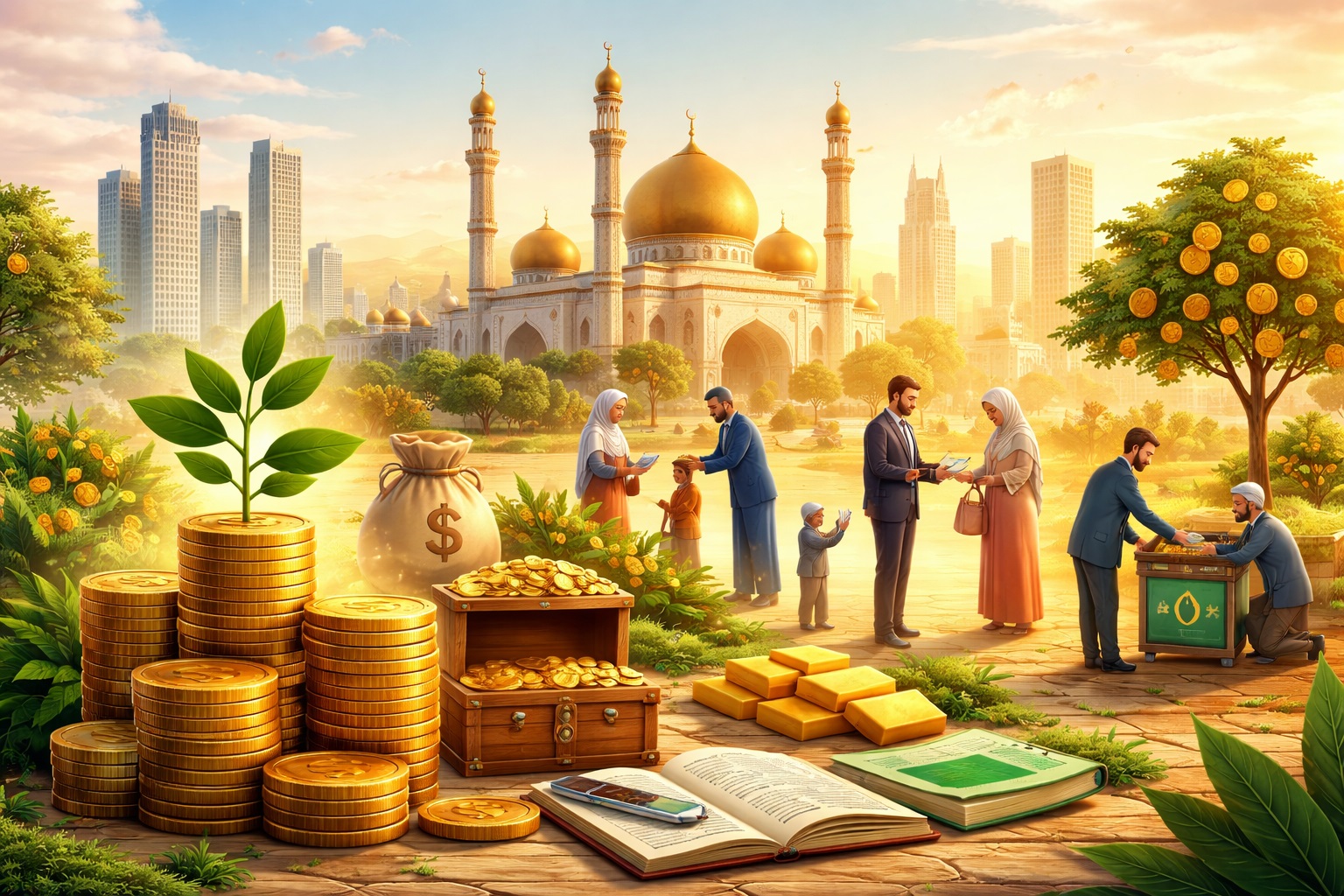
1. What Is Entrepreneurship? Complete Global Guide
Entrepreneurship is the act of starting and running a business to make money and solve real-life problems. Entrepreneurs are risk takers, investing their time, money and effort in looking for the opportunity to differentiate their firms. Entrepreneurship is a vital source of job creation, innovation and economic development globally. Entrepreneurship can be huge or little. From small enterprises to large global corporations.
To be a strong corporate leader you have to lead people, make choices, innovate and manage your budget. Nowadays, entrepreneurship is a vital engine of the economy, especially in emerging countries where new ventures generate employment and boost quality of life. For instance, innovative new businesses have brought about a 20 percent reduction in unemployment rates in developing countries.
2. Role of Islamic Finance in Economic Development
Islamic banking is an important aspect of economic success that supports responsible investment and risk sharing. It is free from interest (riba) and works on real asset based financing which keeps the economy steady. Islamic banking institutions are resorting to Shariah compatible contracts such as Murabaha and Musharakah to promote commerce, business and infrastructure development.
It encourages sharing of resources and reduces inequality. Islamic finance relates financial activity to real economic purposes. With new financial practices based on moral and social responsibility, developing countries such as Indonesia may achieve yearly sustainable growth of 5%, attract $1 billion in foreign investment and enable 15% more people to have access to financial services.
3. How Islamic Finance Supports SMEs
Islamic banks provide easy lending to small and medium-sized businesses (SMEs) without any interest rate. Small and medium-sized enterprises are particularly vital to generate jobs and economic growth, especially in the developing countries. For example, the Islamic banks can lend small firms in different forms such as partnership (musharakah) and profit sharing (mudarabah)
With these choices, consumers can establish or expand an existing business without worrying about making regular interest payments. Furthermore, Islamic banking also helps in the sustainable growth of small firms where they can share the risk . “That’s good for the market, because it will be easier for small businesses to get capital.”
4. Islamic Finance and Financial Inclusion
Islamic finance promotes financial inclusion by providing banking services for those who want to shun interest-based systems owing to their religious convictions. For example, Sarah, a small business owner who built her firm through Islamic banking services. More consumers and businesses will be able to access financial products like loans, investments and savings accounts. It helps to bridge the gap between people with bank accounts, and those without.
Shariah-compliant financial products and Islamic microfinance are very critical for rural and low income settings.Islamic banking promotes kindness and values and makes the financial system more open to individuals in an easier way. It supports economic equality and generates long-term growth.
5. Social Impact of Islamic Finance
The practice of Islamic banking is very important for society since it promotes equality, justice and the right way of distributing wealth. It encourages people to spend their money toward programs that help others, such as infrastructure, health care and education. Staying away from illegal industries such as gaming, alcohol and unethical businesses is good for society.
Tools like Zakat and charitable funding also help in the fight against poverty and support to the needy.This method increases the welfare of society and boosts the confidence of individuals in financial institutions. This is why Islamic banking assists not only in the growth of the business but also in keeping the society stable and peaceful.
6. Islamic Finance and Poverty Reduction
Islamic banking provides people with interest-free equitable financial services which helps to decrease poverty. Poor people can benefit from microfinance programs, Zakat funds and charitable investments. Tools to help people get their own money, create small businesses, and earn more money. The Islamic banking system is based on the notion of profit sharing and does not burden individuals with debt as in the case of conventional loans.
This technique encourages independence and strengthens low-income communities. Islamic banking is aiding the poor and raising the living standards in impoverished countries by motivating them to set up their own ventures and be employed in small businesses.
7. How Islamic Finance Encourages Entrepreneurship
Islamic banking is a moral and risk sharing financial solution that helps individuals grow their businesses. Rather than providing new firms with interest-bearing capital, it partners with them. Mudarabah and Musharakah are the sources of the money for the entrepreneurs sharing profits and losses. That takes the pressure off and allows new ideas to emerge.
Islamic banking also promotes healthy economic practices and abstention from exploitation of others.It offers financing to useful areas to help new enterprises to grow and succeed. This contributes to the growth of the economy in general. It makes business more sustainable and reachable to everybody.
8. Islamic Finance in Developing Economies
Islamic financing is a positive thing for poor countries because it creates growth that benefits all. Many emerging countries have to cope with issues of poverty, unemployment, and limited access to banks. Islamic finance addresses these challenges through moral investments and asset-backed loans. It helps with infrastructure and with small enterprises and farming. It decreases the “money risk and disaster” by stopping people from performing dangerous things.
It also appeals to investors interested in ethical banking, Muslim or not. It helps poor countries get their finances in better order so they can grow consistently over time.
9. Role of Islamic Finance in Stability
Islamic banking helps to minimize too much risk, speculation and interest based transactions contributing to economic stability. This means all finance acts are linked to real assets and investments that will pay off. This decreases the chance of bubbles and financial crises. Risk-sharing ideas let business owners and investors bear financial risks equally.
Islamic banks also have higher moral standards which make the financial sector more trusted by consumers . Islamic banking so has a stabilizing influence on the economy and promotes a more balanced economy which is better for long-term success.
10. Islamic Finance and Sustainable Growth
Islamic banking fosters long-term growth through ethical investment and value creation throughout time. It encourages money to go to areas that are good for society, such as healthcare, education and renewable energy. It is free of interest and gambling and hence has a close correlation between financial activity and real economic output.
It keeps things steady a little and helps to maintain the growth going on.” The sustainability goals of the world are consistent with Islamic finance which is based on social and environmental responsibility. So it helps to create a stable economy and growing consistently during the period.
11. Comparison of Islamic and Conventional Financial Systems
In general, the Islamic banking systems differ from the other financial systems because of the laws and structures. Islamic finance is based on the Shariah rule which prohibits interest (riba) and requires people to share risks. Conventional finance, on the other hand, relies heavily on interest-bearing loans. Islamic finance is different from conventional finance which may involve risky investments; instead, it is based on asset-backed transactions that guarantee genuine economic activity.
Muslims’ money is moral, and they avoid firms that do harm to society. The goal in traditional banking is to make as much money as you can. Both systems aim at economic growth but Islamic banking places more emphasis on equity, stability and social responsibility.
12. How Islamic Finance Supports Real Economy
Real economy benefits, as Islamic banking transactions are based on genuine assets and economic activity. It makes people more likely to spend on business, commerce and infrastructure rather than selling for speculative gain. This tactic has enormous benefits that go far beyond the generation of jobs. Murabaha and Ijara are ways of managing money. It ensures that money is spent on actual things and services. Islamic finance stabilizes the economy and makes it less vulnerable to financial crises, because it focuses on real economic growth rather than speculative paper.
13. Role of Zakat in Economic Balance
Zakat is an important part of Islamic banking that results in the fair distribution of revenue and maintains the economy in good condition. Rich people should contribute a part of their savings to help poor and needy people. This produces a fairer income and maintains welfare programs. Money collected as zakat can be utilized to help people get an education or medical care or lift them out of poverty. “Zakat is a mechanism for distribution of wealth in the society. It prevents the concentration of wealth in few hands. It makes the economy fairer, and seeks to make society fairer.
14. Waqf and Its Economic Importance
Waqf in Islamic finance is a type of charitable endowment meant for long-term economic and social development. The people help with cash, land, buildings, or other things. Waqf generates income that helps to meet costs for items like health care, education, and community services. This arrangement is a key part of making the government’s work easier and life better for everyone.” In the past, Waqf has aided colleges, hospitals, and infrastructure. It is still a useful instrument in fighting poverty and supporting long-term progress.
15. Islamic Microfinance Explained
Islamic microfinance provides small loans on an interest-free basis to low-income households. It enables people to get their employment, to create their own firms and to make more money. This is unlike other microloans because it is sharing the earnings and ethical ways of financing. This strategy is very effective in the underserved rural areas. Islamic microfinance helps to eliminate poverty by improving economic empowerment and access to credit for the poor. Also, it inspires the local people to start their own business which gives rise to the whole economy.
16. Islamic Finance and Social Justice
Islamic finance strongly advocates for social justice, ensuring that wealth is distributed fairly and enterprises operate honestly. It will not allow fraud, exploitation, or unfair means based on interests. “It helps everyone to have equal chances through tools like Zakat, charity, and sharing profits. Investing goes to places that are excellent for society. Such an approach improves the community. This method is a fairer approach and safeguards the rights of all in the economy. Social justice remains a key area in Islamic banking.
17. Ethical Capital Allocation in Islamic Finance
Islamic finance is the ethical investing of capital, when investments are socially beneficial and Shariah-compliant. The government invests in commercial, industrial and infrastructure manufacturing industries. So, folks, stay away from industries that are unhealthy for them. Like gambling. Like booze. Like unethical companies. So we should all be investing. Ethical allocation leads to long-term economic security, trust and transparency. It also forces investors to focus on creating real value, not quick wins.
18. Islamic Finance and Risk-Sharing Economy
Islamic finance promotes an economy where investors and business owners share both earnings and losses. This makes partnerships more equal by taking some of the financial burden off one side. In these systems the risk is more spread out. Interest-based systems tend to concentrate risk. This makes them more stable. This concept stimulates creativity and entrepreneurship by making people less fearful of debt. Also, it helps in building confidence between banks and customers, which makes the economy more stable.
19. Public Policy and Islamic Finance
Public policy is particularly important in supporting Islamic finance since it provides the norms and principles for the functioning of Islamic finance. Governments may nurture Islamic banks, Sukuk markets, and Shariah-compliant assets. Good governance helps to provide clear regulations, trust, and the growth of the sector. Islamic finance can also be included in the public policy of the economies of the countries. That means more individuals have access to money, a stable economy, and greater investment. Strong restrictions can make Islamic banking a great growth engine.
20. Future Economic Role of Islamic Finance
The future looks positive for Islamic banking since more and more people throughout the world require excellent money.” It is predicted to grow in banking, online banking and corporate banking. Islamic banking will be highly vital for long-term prosperity, trade around the world and investments that pay dividends. With fintech and other new technology, it will be easy for individuals throughout the world to receive it. It is founded on equity, openness and risk-sharing, and it works for modern countries and promotes long-term progress around the world.