
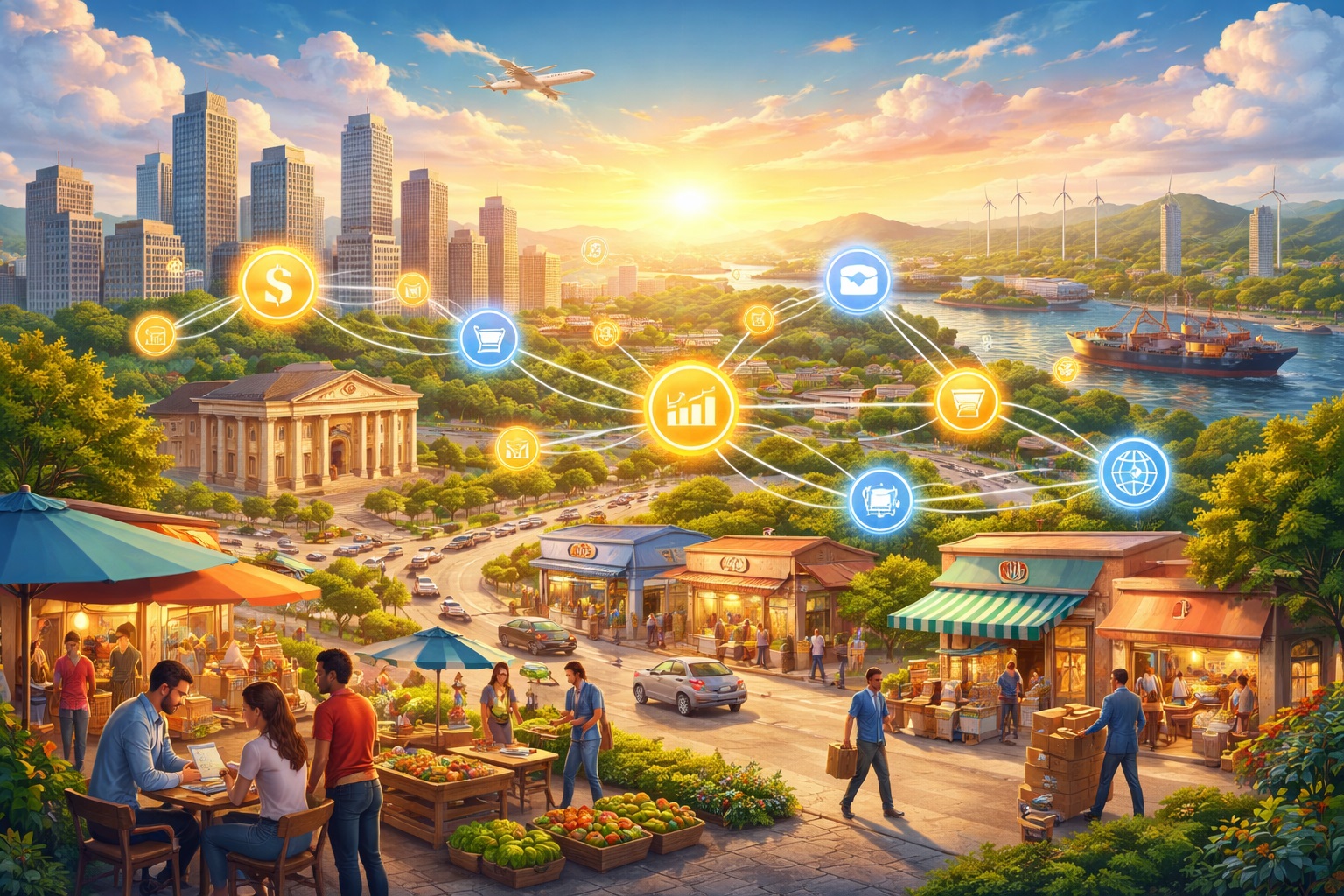
It could appear that the economy is a complicated system run by specialists, governments, and major businesses. A lot of people believe it’s something that doesn’t affect them every day. The economy has a big effect on people’s lives in real life. It has an impact on how much money you make, what you can purchase, whether you can get a job, and how pleasant your life is.
The economy is not only about statistics and charts; it’s also about people, decisions, and resources. It’s about individuals, their options, and their resources. You are actively participating in the economy when you do things like purchase food, work, save money, or pay taxes.
Step 1: Human Needs and Wants
People’s needs and desires are what start the economy.
Basic needs
People need:
- Food
- Water
- Shelter
- Clothing
- Healthcare
Wants
People also want:
- Better houses
- Smartphones
- Fun
- Travel
- Comfort and luxury
We can’t have everything we desire since we don’t have enough resources. Because of this lack of resources, individuals and communities have to make decisions, such whether to purchase food or pay rent. These decisions are what make the economy work.
Step 2: Resources
Societies employ resources, sometimes called components of production, to meet their needs and desires. There are four primary kinds:
1. Land
This includes:
- Natural resources including oil, water, and forests
- Land for manufacturing, homes, and farming
2. Labor
People working hard, both physically and mentally:
- Farmers that cultivate food
- Teachers teaching students
- Engineers make plans for structures.
3. Capital
Tools produced by people that help make products and services:
- Devices
- Factories
- Tools
- Technology
4. Entrepreneurship
People who:
- Be brave
- Start a business
- Put together land, labor, and money
Resources stay untapped without entrepreneurs.
Step 3: Production
The most important part of making things is making things like food and services like education and healthcare.
Goods
Things that are real, like:
- Food
- Clothes
- Cars Services
Work that isn’t physical, like:
- Transportation
- Healthcare
- Education
Businesses plan how to make things by deciding:
- What to make
- How much to make
- How to make it
These choices are affected by prices, competitiveness, and what people want.
Step 4: Specialization and Division of Labor
People should specialize instead of everyone doing everything. This makes economies run better.
Specialization
Each individual concentrates on their strengths:
- A baker creates bread.
- A mechanic fixes vehicles.
Division of labor
Production is divided into smaller jobs:
- One person chops apart the materials
- Another puts things together
- A different package
This makes it go up:
- Efficiency
- Quickness
- Quality
When production goes up, commodities become less expensive and easier to find.
Step 5: Trade Exchanging Goods and Services
People trade because they can’t make everything they need.
Why trade happens
- You provide money for food
- Companies sell goods for money.
- Countries trade things they don’t have.
Trade makes it possible for:
- More choices
- Prices are lower
- Higher quality
Trade may take place:
- Between people
- Between companies
- Between nations
Step 6: Money Making Trade Easier
Before money was invented, people traded products directly for what they needed. Bartering didn’t work well.
This issue can be fixed with money.
Functions of money
Money serves as:
- A way to purchase and sell things
- The unit of account shows how much something is worth.
- Store of value keeps your buying power safe.
Money makes trading quicker, smoother, and easier to grow.
Step 7: Markets Where Buyers and Sellers Meet
A market is any area where people purchase and sell things.
Types of markets
- Shops, bazaars, and other physical marketplaces
- E-commerce (online marketplaces)
- Job marketplaces (jobs)
- Financial markets (stocks and bonds)
Markets decide:
- Prices
- Amount made
- Standards for quality
Step 8: Supply and Demand
Supply and demand set prices.
Demand
Demand is the number of products or services that people are willing to purchase at a certain price.
- Lower prices mean more people want to buy.
- Higher prices mean less demand.
Supply
Supply is the amount of goods that manufacturers are willing to sell.
- More supply when prices go up
- Less supply means lower pricing.
Price Balance
The market is in balance when supply and demand are equal.
Step 9: Competition Keeping the Economy Healthy
There is competition when more than one vendor tries to get customers.
Benefits of Competition
- Prices that are lower
- Higher quality
- New ideas
- More options
Prices tend to go up when there isn’t much competition, and the quality of goods or services may go down.
Step 10: Income How People Earn Money
People make money by:
- Getting paid for work
- Owning companies (making money)
- Putting money into stocks and bonds (interest and dividends)
- Renting a place to live (rent)
Income decides:
- Standards of living
- Ability to spend
- Money in the bank
Step 11: Consumption Spending Money in the Economy
Using things and services is what consumption entails.
When people buy things:
- Companies make money
- People stay their jobs
- The production goes on.
People’s spending is frequently what makes the economy grow the most.
Step 12: Saving and Investment
Saving
Saving implies not spending all of your money right away.
Investment
People utilize their savings to:
- Make factories
- Get machines
- Make technology better
Investment leads to:
- More productive
- Growth of the economy
- Jobs that are better
Step 13: Financial Institutions
Banks and other financial institutions:
- Get savings
- Give out loans
- Help businesses
They link:
- People who save money
- People that need cash
This maintains the flow of money going throughout the economy.
Step 14: Government
Governments have a lot of different jobs:
1. Making rules
Keep people safe
Make sure that competition is fair
2. Providing services
- Roads
- Schools
- Health
- Defense
3. Collecting taxes
Taxes pay for things that the government does for the people.
4. Redistributing income
Help from the government:
- The poor
- People who don’t have jobs
- The old people
Step 15: Taxes Funding the System
The following people pay taxes:
- Income
- Sales
- Property
- Businesses
They help:
- Build up the infrastructure
- Give money to government workers
- Give them help with their social lives
Without taxes, governmental services would fail.
Step 16: Inflation When Prices Rise
Inflation is when prices go up over time.
Causes of inflation
- There is too much money in circulation.
- A lot of demand
- Costs of manufacturing going up
Effects
- Lessens buying power
- Raising the cost of life
Inflation that is moderate is natural, while inflation that is extreme hurts economies.
Step 17: Employment and Unemployment
Employment
Employment means those who are actively looking for work and making money.
Unemployment
People who want to work but can’t find a job.
High unemployment causes:
- Less expenditure
- Less growth
- Problems in society
Step 18: Economic Growth Getting Better Over Time
What does economic growth mean?
- More things and services made
- More money
- Higher levels of living
Growth originates from:
- Education
- Technology
- Investment
- Innovation
Step 19: Economic Cycles Ups and Downs
Economies go through cycles:
- Growth in employment and expansion
- The most activity at its peak
- Slowdown in the recession
- Better recovery
These cycles are typical.
Step 20: Global Economy How Countries Are Connected
There is no nation that stands alone.
Countries trade:
- Goods
- Services
- Technology
- Capital
Global links mean:
- Chances
- Risks
- Growth that is shared
Step 21: Technology and Innovation
Technology makes things better:
- Productivity
- Efficiency
- Communication
Innovation creates:
- New businesses
- Jobs that are new
- New places to sell
Step 22: Inequality Uneven Distribution of Wealth
Not everyone benefits the same way.
Some of the things that cause it are:
- Gaps in education
- Differences in jobs
- Systems of economy
Lessening inequality makes things better:
- Stability in society
- Growth throughout time
Step 23: Sustainability Thinking Long Term
Modern economies have to find a balance between:
- Increase
- The environment
- The next generations
Economies that last:
- Save natural resources
- Help the economy grow in the long run
Step 24: Confidence and Expectations
What people believe is important.
If people think:
- They spend money because they know their jobs are safe.
- They save because the economy is poor.
The economy may move faster or slower depending on how confident people are.
Step 25: How Everything Connects
The economy is a living thing:
- People work, make money, and spend it.
- Businesses make things, sell them, and then put their money into them.
- Governments tax, spend, and make rules.
Each portion affects the others.
The Economy Works Is About People
The economy isn’t a secret that a few strong people control; it’s something that regular people make choices about every day. Every day, regular individuals make regular choices that shape it.
When you:
- Work
- Buy
- Save
- Put money into
You make the economy what it is.
Step-by-step learning about how the economy works helps you:
- Make smarter choices about money
- Know the news and the rules
- Make plans for your future
Life and the economy are not two different things.
It is life, in order.