
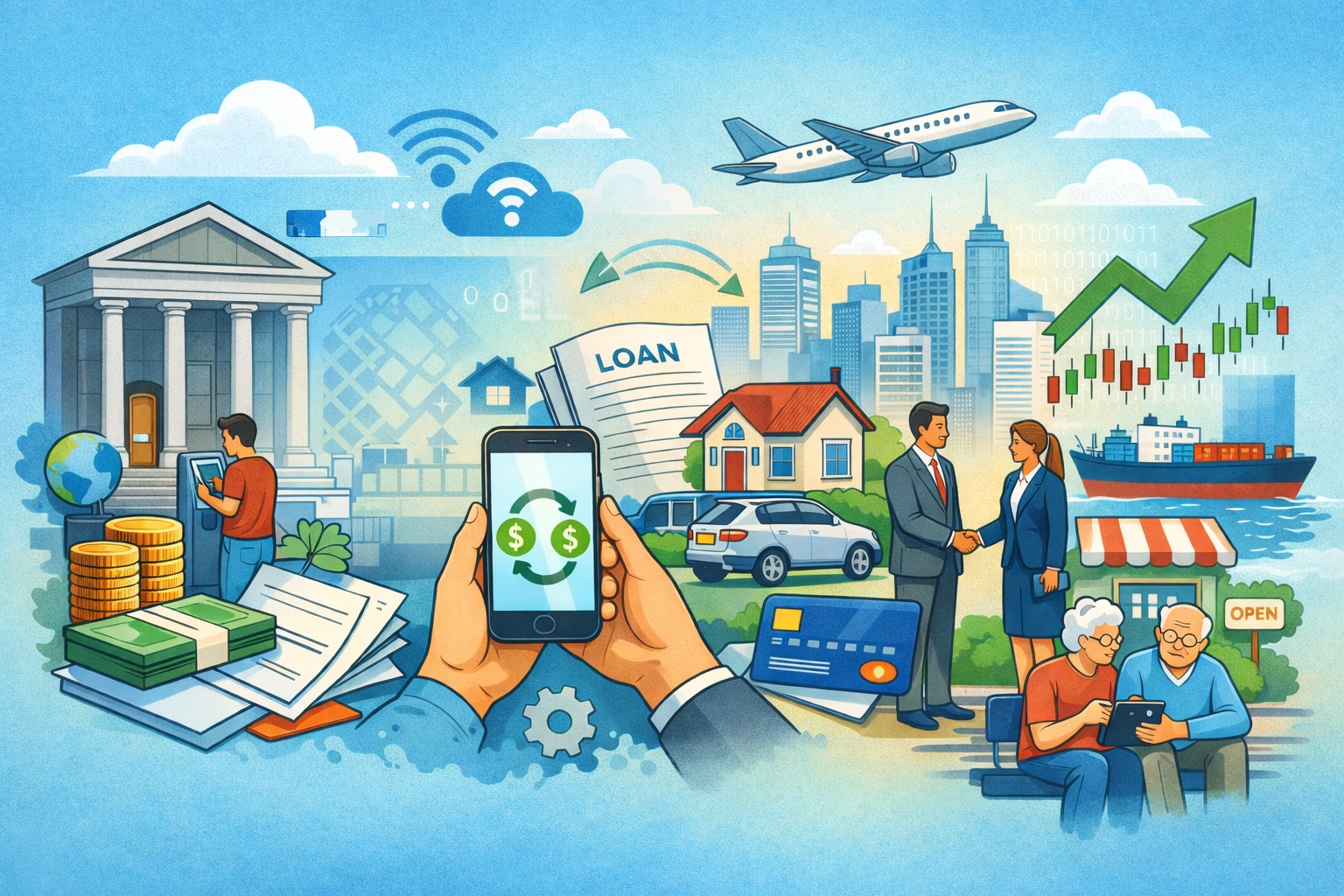
Why Banking Matters in Everyday Life
Banking is one of those systems that runs in the background of our lives. Most individuals use banks practically every day to get paid, pay bills, transmit money, save for the future, or borrow money to reach big life objectives. However, they don’t often think about how banks function or why they are so crucial.
Banking links people in many ways, such as a farmer storing money for the winter, a student paying for school, a store owner taking digital payments, and governments running the economies of whole countries. It is the basis that makes it possible for money to flow securely, reliably, and quickly between people, corporations, and nations.
Modern life as we know it would not be possible without banks. Trade would slow down, savings would be at risk, firms would have trouble growing, and the economy would stop growing.
1. What Is Banking?
Banking is the way to handle money securely and well.
To put it simply:
Banking is the process of taking money, keeping it safe, lending it to those who need it, moving it from one person to another, and helping people and companies keep track of their money.
Banks are reliable financial partners that help people with their money and do business with them. They link those who need money with others who wish to save money, making sure that everyone is secure, easy to use, open, and protected by the law.
Trust is the most important thing in banking since it makes sure that financial transactions are honest and safe.
2. Understanding Banking Through Everyday Life
To really get banking, consider about how you do things every day:
You make money by working or running a company.
- You need a secure location to put it.
- You want to save some for later.
- You spend money on food, bills, and other things you need.
- You may borrow money to purchase a house, establish a company, or pay for school.
- A bank lets you perform all of these things in a planned manner.
Now picture a world without banks:
- You might lose or steal cash that you keep at home.
- It would take years to save enough for big goods.
- Companies wouldn’t be able to grow
- It would be slow and dangerous to pay people or get paid.
The use of banking results in the enhancement of the reliability, stability, and organization of financial matters.
3. Why Banking Exists: The Core Purpose
The objective of banking is not just to generate profits; it is also to maintain economic stability and to provide assistance to individuals.
Banks are there to:
- Keep your money secure
- Promote saving
- Make payments quick and easy
- Give out loans and credit
- Help businesses grow
- Allow commerce between countries and inside the country
- Keep economies stable during times of crisis
In short, banking helps money go to where it is needed most.
4. A Brief History of Banking (Simple Overview)
Early Banking: Ancient Times
Modern structures and computers weren’t the first things that banks had.
- People kept their possessions, such gold and grain, in temples.
- Money changers helped people swap money.
- There were loans even thousands of years ago.
Trust was local and personal.
Medieval Banking
As commerce grew:
- Merchants wanted secure means to send money.
- Instead of transferring cash, banks kept records of transactions.
- Physical gold was replaced with promissory notes.
This made it feasible to trade across large distances.
Modern Banking
As time goes on:
- Banks started to be regulated by governments
- Paper money took the place of gold-backed systems.
- Central banks were set up
- Laws about banks protected depositors.
Digital Age Banking
Today:
- Banking is digital and over the world
- Money moves in a few seconds
- Mobile applications take the role of physical branches.
- Technology makes things work better.
Banking has changed throughout time, but its goal is always the same: to handle money with confidence.
5. How Banking Works (Step-by-Step Explanation)
Step 1: Deposits
People put money into banks in the following ways:
- Accounts for saving
- Checking accounts right now
- Deposits that are set in stone
- Plans for conserving money on a regular basis
This money doesn’t just sit there.
Step 2: Lending
Banks lend money that people have put in their accounts to:
- People who buy homes
- Students
- Businesses that are small
- Big businesses
- Governments
Loans help the economy flourish.
Step 3: Interest Cycle
- People who put money in savings accounts get interest.
- People who borrow money have to pay interest on it.
- The difference is what banks do and the risk they take.
The interest cycle is very important for the financial system to keep working.
Step 4: Services and Fees
Banks also provide services like:
- Cards and payments made online
- Sending money and transfers
- Products for investing
- Advisory services
These services make things easier and more useful.
6. Core Functions of Banking (Explained Clearly)
Accepting Deposits
Banks are secure places to save money and they encourage people to save.
There are several kinds of deposits, such as:
- Deposits for savings (for people)
- Current deposits (for companies)
- Fixed deposits are for saving money for a long time.
- Regular deposits (little amounts of money saved regularly)
Saving money helps you be more disciplined and secure with your money.
Providing Loans and Credit
Banks assist individuals reach objectives that would take them years to reach on their own.
You can get loans for:
- Houses
- Learning
- Cars
- Companies
- Emergencies
Credit converts money you will make in the future into money you can use now.
Money Transfer and Payments
Banks make it easier to pay by:
- Transfers between banks
- Credit and debit cards
- Apps for phones
- Banking online
- Sending money abroad
This makes it less necessary to use cash and makes things safer.
Safekeeping of Valuables
Banks provide lockers and safekeeping services for:
- Jewelry
- Documents that are legal
- Gold
- Important papers
This makes me feel better.
Supporting Trade and Business
Banks aid companies by:
- Giving working capital
- Handling payroll
- Giving guarantees
- Helping trade in goods and services
Banks are necessary for modern businesses to stay in business.
7. Types of Banking
Commercial Banking
This is how people bank every day:
- People
- Small enterprises
- Companies
Accounts, loans, cards, and digital banking are some of the services offered.
Central Banking
Central banks are in charge of:
- Currency of the country
- Interest rates and inflation
- How much money there is
- Rules for banks
They care more about keeping the economy stable than making money.
Investment Banking
Investment banks are mostly about:
- Getting a lot of money
- Mergers and purchases
- Giving out shares and bonds
They work for businesses and the government.
Islamic Banking
Islamic finance is founded on:
- Finance that is moral
- Sharing profits and losses
- Transactions backed by assets
- No lending based on interest
It encourages fairness and actual business activity.
Digital and Online Banking
- Access 24 hours a day, 7 days a week
- Transactions without paper
- Services that work well on mobile devices
- Operations that are faster and cheaper
8. Why Banking Is Important for Individuals
People may get aid from banks by:
- Save money in a safe way
- Make plans for your schooling and retirement.
- Take care of medical or money crises
- Buy cars and houses
- Start businesses
It changes money into long-term security.
9. Why Banking Is Important for Businesses
Companies depend on banking to:
- Get payments from customers
- Pay workers and suppliers
- Take care of your financial flow
- Get loans
- Grow both locally and worldwide
Modern business depends on banks.
10. Role of Banking in the Economy
A good financial system:
- Encourages people to invest
- Makes jobs
- Helps trade
- Keeps prices from going up
- Keeps markets stable
A robust economy typically means healthy banks.
11. Banking and Financial Inclusion
Modern banking wants to bring those who are on the outside of the financial system into it, such as low-income people, rural communities, and women business owners.
- People with low incomes
- Communities in the country
- Small enterprises
- Women who start their own businesses
Financial inclusion becomes better:
- Learning
- Health care
- The quality of life
- Equality in the economy
12. Banking and Technology
Technology has revolutionized banking in the following ways:
- Apps for mobile banking
- Services on the internet
- AI
- Automating
- Systems based on blockchain
Some of the benefits include speed, ease of use, cheaper expenses, and improved security.
13. Online Banking vs Traditional Banking
Traditional Banking
- Branches in person
- Processes that use paper
- Few hours
Online Banking
- Access at any moment
- Convenience on the go
- Services that are faster
Most banks currently use both models together.
14. Security and Trust in Banking
Banks keep money safe by using:
- Encryption
- Systems for authentication
- Rules
- Insurance
- Checks
Banking is built on trust.
15. Risks in Banking
There are hazards in banking, such as:
- Risk of credit (not paying back loans)
- Risk from changes in the economy
- Risk of operations (system failures)
- Online dangers are a kind of cyber risk.
Banks protect themselves from possible dangers by putting rigorous procedures in place, keeping reserves, and enforcing internal controls.
16. Ethics and Responsibility in Banking
What is the essence of responsible banking?
- Fair lending
- Clarity
- Protecting customers
- Finance that lasts
- Investments that are in line with moral values and long-term practices that have good effects on people and the environment.
Banking that is good for society, not only for making money.
17. The Future of Banking
The future of banking looks like this:
- Banks that are completely digital
- Economies without cash
- Services that use AI
- Financial products made just for you
- Connecting finances throughout the world
In the future, banking will focus on making things easier, faster, and more focused on the consumer. This will make the whole banking experience better.
18. Common Banking Terms
- Deposit: Money that is held in a bank
- Loan: Money that you borrow
- Interest: the cost of borrowing money or the incentive for keeping it
- Account: Your money records
- Balance: Money that is there
- Credit: Money you borrow
- Debit: Money taken out of your account
19. Common Banking Myths
Myth: Only wealthy individuals can use banks
Truth: Banks help everyone
Myth: Banking is hard
Truth: Modern banking is meant to be easy to use.
Myth: Cash is safer than banks
Truth: Banks are safer than keeping cash at home.
20. How to Use Banking Wisely
- Save often
- Don’t take on debt you don’t need
- Know the conditions of the loan
- Be cautious when you use digital tools
- Keep your personal information safe
- Make plans for your long-term money objectives.
Being smart about banking can help you stay financially stable.
21. Banking and Everyday Life
Banking quietly and continually supports life, from paying for coffee in the morning to getting a monthly paycheck, from student loans to retirement funds.
It’s more than simply a system.
It is a partner in money.
22. Banking in Simple Words
Trust, money, and advancement are all important in banking.
It helps:
- People grow
- Businesses grow
- Economies grow
- Societies do well
If you know how banking works, you can make better choices, plan for your future with confidence, and see the world clearly.
Banking isn’t about buildings, applications, or technology; it’s about helping people use money to go through life.