
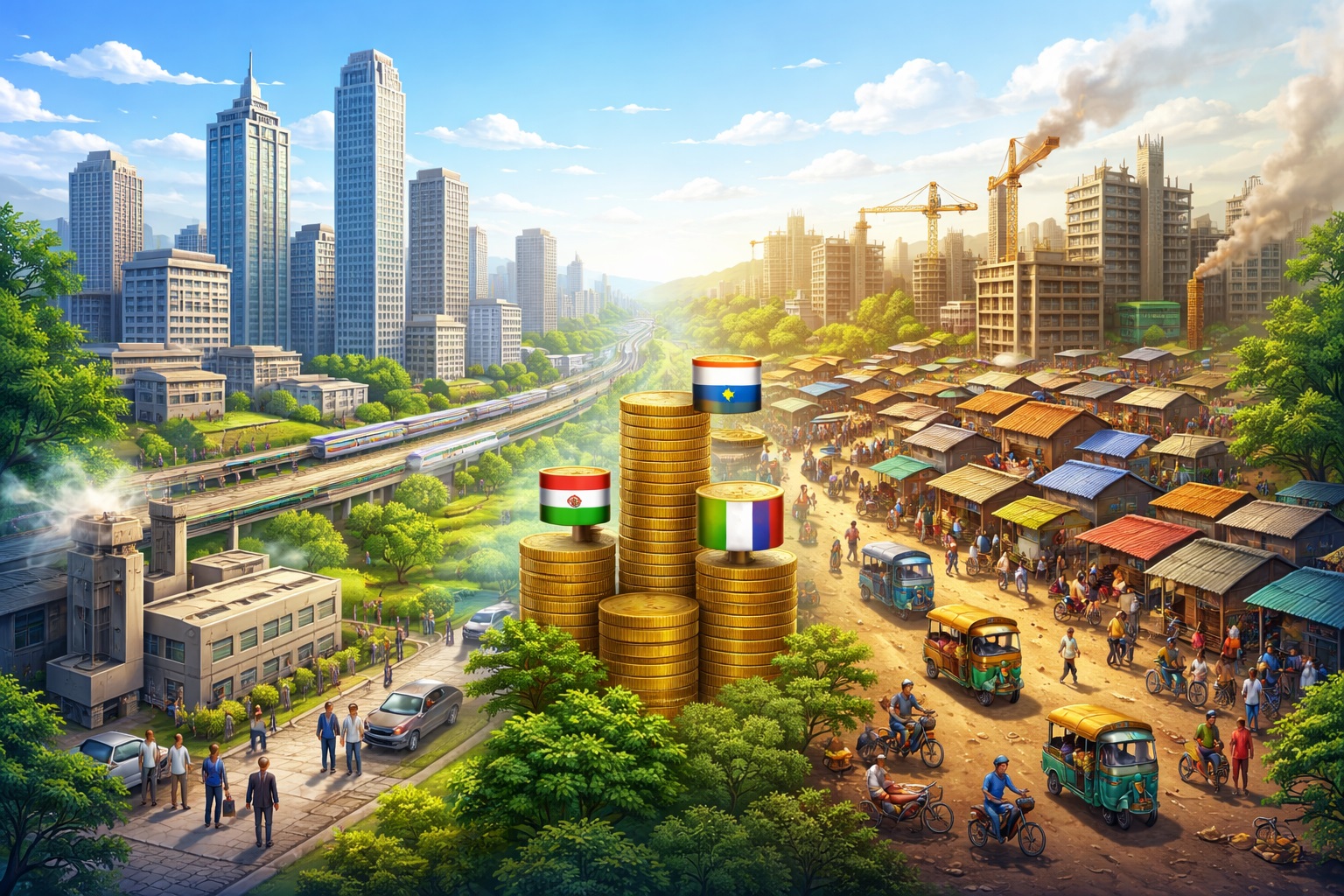
Numerous nations all around the world are now undergoing a variety of stages of economic growth and development. These stages are occurring at the present moment. When it comes to economics and politics, nations are often separated into two different categories: those with economies that are already well-established and those with economies that are progressively rising. Having an awareness of this discrepancy is absolutely necessary if you want to have a comprehension of international trade, the opportunities for investment, the levels of living, and the challenges that countries are presented with.
What Are Developed Economies?
Countries with developed economies, sometimes called advanced economies or high-income countries, have a high quality of living and strong economic development. These nations are noted for having stable economies, modern infrastructure, well-established institutions, and a high Human Development Index (HDI).
Key Features of Developed Economies
High Per Capita Income
For example, the GDP per person in Switzerland and Luxembourg is more than $80,000. This makes it easier for people to get health care, go to school, and have fun.
Industrialization and Technological Advancement
Industrialization and technical growth have a big impact on these economies. Information technology, manufacturing, healthcare, and finance are some of the most important parts of their economies.
Strong Infrastructure
Developed countries put a lot of money into building and improving roads, trains, airports, and communication networks to boost commerce and make the economy run better.
Stable Political and Economic Systems
Governments that are stable, the rule of law, and robust financial institutions are two characteristics that are often associated with developed economies. Due to this stability, money is brought in from both inside the nation and from outside the country.
High Human Development Index (HDI)
The United States, Germany, and Japan have high HDI scores because their people are healthier, more educated, and earn more money.
What Are Developing Economies?
Developing economies, also known as emerging or low-to-middle-income countries, are countries that are becoming more industrialized and their economies are growing. They have problems like low incomes, bad infrastructure, and social inequality, but they have a lot of room to expand.
Key Features of Developing Economies
Low to Middle Per Capita Income
Because the average GDP in developing countries is lower, people there have less access to fundamental amenities like healthcare, education, and sanitation.
Agriculture-Based Economies
A lot of emerging nations depend on agriculture, but their industrial and service sectors are increasing. India, Nigeria, and Indonesia are among examples.
Infrastructure Challenges
Roads, transportation networks, and utilities are typically not well developed, which might slow down commerce and economic progress.
High Population Growth
Many emerging economies are seeing their populations expand quickly. This might put a burden on resources, but it can also provide them a youthful workforce for future growth.
Social and Economic Inequalities
Developing countries often encounter a variety of issues, including disparities in the distribution of financial resources, disparities in educational opportunities, and restrictions on access to medical care. Getting over obstacles of this kind could prove to be very challenging.
Economic Indicators: How They Differ
Economists use a few important markers to tell the difference between established and developing economies:
1. Gross Domestic Product (GDP) and GDP Per Capita
Developed Economies
A lot of money in the GDP and GDP per person. For instance, the GDP per person in the United States is more than $70,000.
Developing Economies
Developing economies usually have lower GDP and GDP per person levels. For instance, India’s GDP per person is around $2,500.
2. Industrialization Levels
Developed Economies
Developed economies have strong manufacturing and service sectors that use cutting-edge technology.
Developing Economies
Agriculture and raw material exports are important parts of many economies, although they are slowly shifting toward industrialization.
3. Employment Patterns
Developed Economies
Most people work in industry and services.
Developing Economies
A lot of people work in agriculture and other casual jobs.
4. Health and Education
Developed Economies
High literacy rates, long life expectancy, and access to healthcare are all signs of a developed economy.
Developing Economies
Less access to health care, lower literacy rates, and greater infant death rates.
Examples of Developed and Developing Economies
Developed Economies
- The United States
- Germany
- Japan
- United Kingdom
- Canada
- Australia
- The United States
Developing Economies
- India
- Brazil
- Nigeria
- Indonesia
- Mexico
- South Africa
- India
These examples show how different levels of wealth, infrastructure, and industrial growth are throughout the globe.
Factors That Influence Economic Development
Natural resources, human capital, political stability, technical innovation, and infrastructure are some of the most important things that cause the differences between established and developing economies.
1. Natural Resources
Countries may be able to speed up their growth if they manage their natural resources, such oil and minerals, well. But bad management might cause the economy to stop growing.
2. Human Capital
Learning new things and improving your skills are very important for the economy to prosper. Developed countries spend a lot on human capital, whereas emerging economies may have trouble getting good education for everyone.
3. Political Stability
Stable governments make it easier for the economy to expand, whereas unstable governments may scare off investors and slow down progress.
4. Technological Innovation
To go from a developing economy to a developed one, it is important to adopt and come up with new technology. Most of the time, developed countries are the ones that do the most research and come out with new technologies.
5. Infrastructure
Good transportation, communication, and energy systems help commerce and industry thrive, which is a big part of economic growth.
Challenges Faced by Developing Economies
There are certain things that make it harder for developing nations to improve their economies:
Poverty and Inequality
High levels of poverty make it hard for people to spend money and invest in their own education.
Limited Access to Education
Low literacy rates hinder skilled workforce development.
Healthcare Issues
Poor healthcare systems make people live shorter lives and become sick more often.
Corruption and Weak Institutions
Corruption may take money away from important services and infrastructure projects.
Debt Burdens
A lot of developing countries depend on foreign loans, which makes it harder for them to engage in projects that would help them flourish.
Advantages of Developed Economies
Developed nations gain from their economic maturity:
High Standard of Living
People get better education, health care, and social security.
Technological Leadership
Developed economies are frequently at the forefront of new ideas and trends in business and industry throughout the world.
Stable Investment Climate
Political and economic stability makes people want to invest in both their own country and other countries.
Strong Social Systems
In developed countries, social welfare programs work well to safeguard those who are weak.
How Developing Economies Can Grow
There are a number of ways that emerging economies may go forward:
Investing in Education and Skills
A trained workforce brings in businesses and encourages new ideas.
Building Infrastructure
Better roads, ports, and utilities make commerce and business better.
Diversifying the Economy
Economies may become more stable by relying less on agriculture or basic commodities.
Encouraging Foreign Investment
Making the area good for business might bring in enterprises from other countries.
Reducing Corruption
Clear institutions make things work better and give investors more faith.
Globalization and Its Impact
Globalization has had different consequences on economies that are already established and those that are still developing. For industrialized countries, it has made it easier to find cheaper workers and opened up new markets. For developing countries, it has created chances for trade and international investment, but it might also make them dependent on other countries’ economies.
For Developed Economies
Globalization lets developed economies get cheaper labor, raw commodities, and bigger markets.
For Developing Economies
It may lead to economic dependence, but it also opens up chances for commerce, international investment, and the transfer of technology.
The Role of Technology in Bridging the Gap
For instance, mobile banking has made it easier for people in poor countries to access investment possibilities and become financially included, which has helped close the development gap.
Digital Economy
Access to the internet and digital platforms may help people start businesses in poor countries.
Mobile Banking
Financial inclusion boosts investment and involvement in the economy.
Renewable Energy
By using eco-friendly alternatives, developing countries may skip over obsolete technology.
Measuring Development: Beyond GDP
GDP per capita is a typical statistic, however there are alternative ways to look at a country’s development:
Human Development Index (HDI)
The Human Development Index (HDI) looks at things like income, life expectancy, and education.
Gini Coefficient
Looks at how unequal income is.
Multidimensional Poverty Index
Looks at how easy it is to get health care, education, and a good quality of life.
These measurements provide us a better idea of quality of life than merely economic productivity.
Common Misconceptions About Developing Economies
All Citizens Are Poor
Many individuals in emerging countries are rich or middle class, even if the average income is lower.
No Industrialization
Many developing nations have strong industries and new tech sectors.
Slow Growth
The economy of a number of emerging countries, like China and India, have seen tremendous development over the course of the previous few decades on account of sustained economic expansion.
Case Studies: Success Stories
1. South Korea
South Korea used to be a poor nation, but it spent a lot of money on education, technology, and infrastructure. It is now a developed economy with a strong technology and manufacturing sector.
2. China
Through industrialization, foreign investment, and the adoption of new technologies, China changed from a mostly agricultural economy to the second-largest economy in the world.
To comprehend how the world’s economies work together, you need to know the differences between established and developing countries. People in developed countries have high standards of life, advanced technology, and stable governments. Developing nations have a lot of room to expand via investment, education, and industry, even while they face problems like poverty, inequality, and a lack of infrastructure.
Globalization, technology, and smart policies are helping to close the gap between developed and developing economies in several sectors. Developing economies may speed up their growth and raise the quality of life for their inhabitants by concentrating on sustainable development, innovation, and human capital.
In today’s world, when everything is linked, both established and emerging economies are very important for the future of commerce, industry, and innovation throughout the globe. Governments, corporations, and people can make better choices for the economy and society if they understand how these things work.