
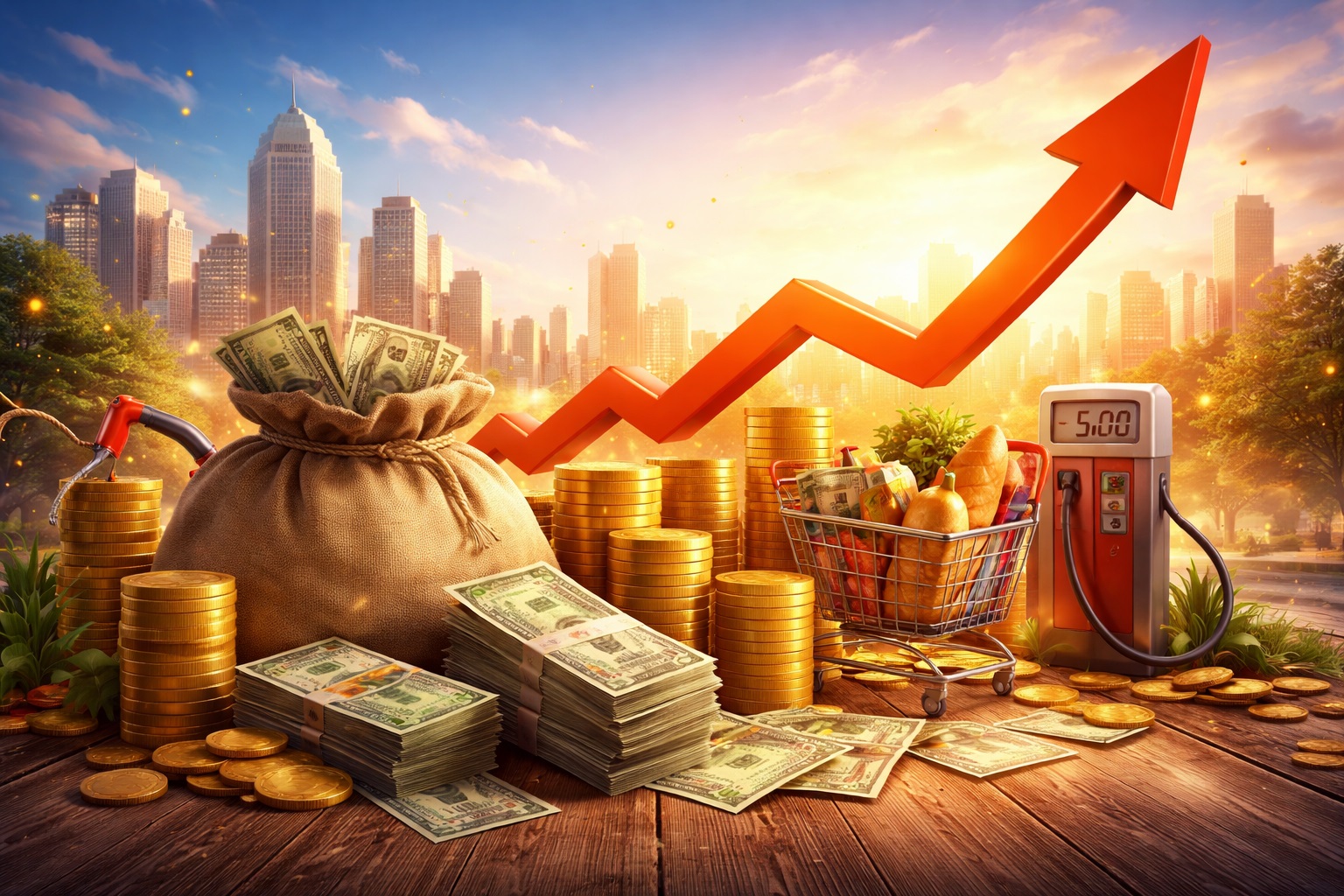
What Is Inflation, and Causes of Inflation
People commonly comment, “Inflation is very high these days,” when prices go up and it seems like money doesn’t purchase as much as it used to. But what does inflation happen? Why does it happen again and over in practically every country? And most importantly, why does it have such a big effect on regular people?
When prices of goods and services in an economy keep going up over time, that’s called inflation. The value of money goes down when inflation goes up, which means it can purchase less than it used to. This implies that you can purchase fewer things and services with the same amount of money.
For instance:
- If a loaf of bread costs $1 today
- And the following year, it costs $1.20.
That rise is inflation.
Inflation doesn’t just mean that prices for certain commodities go up; it means that prices for all goods and services go up across many industries. This covers things like food, gas, rent, clothing, and getting around, all of which cost extra.
Why Understanding Inflation Matters
Inflation has an effect on everyone:
- Workers think their pay isn’t enough
- Families have a hard time paying for things around the home.
- Costs are going up for businesses
- Governments are concerned about the economy’s stability.
People may do the following by knowing what causes inflation:
- Make smarter choices about money
- Get the latest about the economy
- Stay away from fear and misunderstanding
- Plan your savings and expenditures carefully.
Main Causes of Inflation
To understand how complicated inflation is, you have to accept that it isn’t driven by just one thing. It occurs because of a number of things working together. The most important reasons are:
- More money in circulation
- A lot of people want products and services
- Costs of manufacturing are going up
- Government expenditures and rules
- Wage increase
- Shortages in supply
- Prices for imports and a weak currency
- Inflation expectations
- Events and shocks throughout the world
- Problems with the economy’s structure
Let’s look at each reason one at a time, in plain language.
1. Increase in Money Supply
Too much money in circulation is one of the main things that creates inflation.
How It Works
When additional money is printed or put into the economy:
- People have more money to spend.
- More people want products
- Sellers boost prices because they know customers can afford it.
A Simple Example
Picture a village with:
- Ten persons
- Ten apples
- A dollar for each apple
Now picture this: everyone suddenly receives more money, but the amount of apples remains the same. Sellers hike prices because people want to purchase apples. It might now cost $2 for the apple.
More money and the same items mean greater pricing.
2. Demand-Pull Inflation (High Demand)
Demand-pull inflation develops when demand rises faster than supply.
Why Demand Increases
The following things may make demand go up:
- Growth of the population
- More money
- Loans and credit that are easy to get
- Government help
- Growth in the economy
What Happens Next
When a lot of people desire to buy:
- Houses
- Cars
- Food
- Electronics
Prices inevitably go up when there aren’t enough things available.
Real-Life Example
When the economy is doing well:
- People are sure of themselves
- More money is being spent
- It’s hard for businesses to stay up
- Prices go up
3. Cost-Push Inflation (Rising Costs)
When it costs more to make things, that’s called cost-push inflation.
Common Rising Costs
- Raw commodities include oil, gas, and metals
- Electricity and gas
- Getting around
- Taxes on rent
- Pay
When firms have to pay more, they raise prices to cover the extra expenses.
An easy example
If the cost of gasoline goes up:
- Transportation costs a lot
- Prices for food delivery go up
- Prices of groceries go up
People who don’t drive also experience the effects.
4. Rising Fuel and Energy Prices
The economy runs on energy. Inflation frequently comes after energy costs are increased.
Why Energy Matters
People utilize fuel for:
- Transportation
- Electricity
- Making things
- Farming
Chain Reaction
Higher prices for gasoline lead to higher prices for transportation, which leads to higher prices for goods and services.
This is why the price of gas going up affects practically everything, from school tuition to veggies.
5. Government Spending
Inflation may go up when governments spend more than they make.
How Government Spending Causes Inflation
Governments can:
- Raise the pay of governmental workers
- Give money to help
- Start huge development initiatives
- Give money help
If this expenditure isn’t backed up by genuine production, it makes demand too high, which drives up prices.
Borrowing and Printing Money
Governments may use the following ways to pay for spending:
- Get a loan
- Make new money
If not managed appropriately, these acts may make inflation go up.
6. Increase in Wages
Higher salaries seem wonderful, and they usually are, but they may also make prices go up.
How Wages Affect Inflation
- Because the cost of living is going up, workers want more money.
- Companies give workers more money
- To pay the expense of wages, businesses raise the pricing of their goods.
This starts a wage-price spiral, where
Prices go up, then salaries go up, and then prices go up again.
7. Supply Shortages
Prices go higher when supply is cut down.
Reasons for Supply Shortages
- Natural catastrophes
- Wars and pandemics
- Problems with transportation
- Shutting down factories
- Bad infrastructure
For example
If floods stop farmers from getting their produce to market:
- Food supplies goes down
- The demand remains the same.
- Prices go up
This kind of inflation may come quickly and violently.
8. Import Prices and Weak Currency
Countries that rely significantly on imports are more likely to see prices rise.
Weak Currency Problem
When the worth of a country’s money goes down:
- Imports becoming more pricey
- It costs more to buy food, fuel, and machines.
- Prices go up in the area
For example
If a nation buys oil and its currency goes down:
- The price of oil goes up.
- The cost of gas goes up.
- Prices for food and transportation go up.
This is something that happens a lot in emerging economies.
9. Inflation Expectations
Inflation isn’t only about money and things; it’s also about what people anticipate.
How Expectations Cause Inflation
If people think prices will go up:
- Workers want more money
- Businesses raise prices ahead of time
- People are buying more now because they are afraid prices may go up later.
This kind of activity causes inflation, even before there are true shortages.
10. Population Growth
If supply doesn’t rise as fast as the population, inflation might go up quickly.
Why It Happens
More people mean:
- More people want food
- More housing needs
- More demand for transportation
- Stress on services
Prices go climb when manufacturing doesn’t keep up.
11. Taxes and Government Policies
Prices might also go up because of government policy.
Examples
- More taxes on sales
- Higher tariffs on imports
- New rules for businesses
- Taxes on the environment
Most of the time, businesses pass these increased expenses on to their customers.
12. Global Events and Economic Shocks
Inflation doesn’t necessarily happen in one place. Prices might change all across the globe because of events that happen throughout the world.
Common Global Causes
- Wars
- Limitations on trade
- Pandemics throughout the world
- Breakdowns in the supply chain
- Shocks in the price of oil
Even if a nation runs its economy effectively, inflation might nevertheless happen because of developments in other parts of the world.
13. Monopoly and Lack of Competition
Businesses may raise prices whenever they want when there isn’t much competition.
Why This Matters
- Not many vendors have power over the market
- Customers don’t have many options.
- Prices go up, but quality doesn’t get better.
Most of the time, strong competition helps keep prices from going up.
14. Structural Problems in the Economy
Some economies have long-term structural problems, such as:
- Low productivity
- Bad infrastructure
- Weak institutions
- Corruption
- Agriculture that doesn’t work well
These issues make inflation last by limiting supply.
Types of Inflation
Knowing the different sorts helps understand the reasons better:
- Demand-pull inflation means that there is too much demand.
- Cost-push inflation happens when manufacturing costs go up.
- Built-in inflation: the cycle of wages and prices
- Inflation from imports means higher costs for imports.
There is typically a lot of overlap between different types of inflation, which makes the economy quite complicated.
Is Inflation Always Bad?
Not always.
Mild Inflation Can Be Healthy
- Encourages people to spend
- Helps the economy grow
- Helps companies put money into things
High Inflation Is Harmful
- Lowers buying power
- Damages savings
- Makes poverty worse
- Makes things unclear
The goal is to have steady and controlled inflation, not to have no inflation at all.
How Central Banks Try to Control Inflation
This page is mostly about causes, although it helps to know a little about control measures:
- Increasing interest rates
- Cutting down on the amount of money in circulation
- Managing credit
- Setting expectations
These initiatives are meant to keep prices stable while the economy grows.
How Inflation Affects Daily Life
Inflation has an effect on:
- Grocery costs
- Rent and housing
- Costs of education
- Health care
- Getting around
- Investing and saving
Inflation hurts people the greatest when their income doesn’t grow as fast as prices do.
Simple Summary of Inflation Causes
In short, inflation arises when:
- There is too much cash
- There is too much interest
- There isn’t enough supply
- Costs of making things go up
- Governments spend too much
- Currencies lose value
- Events throughout the world affect markets
No one thing functions by itself. Many things work together to cause inflation.
Inflation is a complicated economic problem, but it doesn’t have to be hard to understand. Inflation is all about finding the right balance between money and products, demand and supply, and spending and production.
People can: by learning about the reasons for inflation in simple words,
- Make better decisions with your money
- Don’t worry when prices go up
- Learn more about how the economy changes
It may be impossible to escape an economic boom, but knowing how to deal with it makes it easier.