
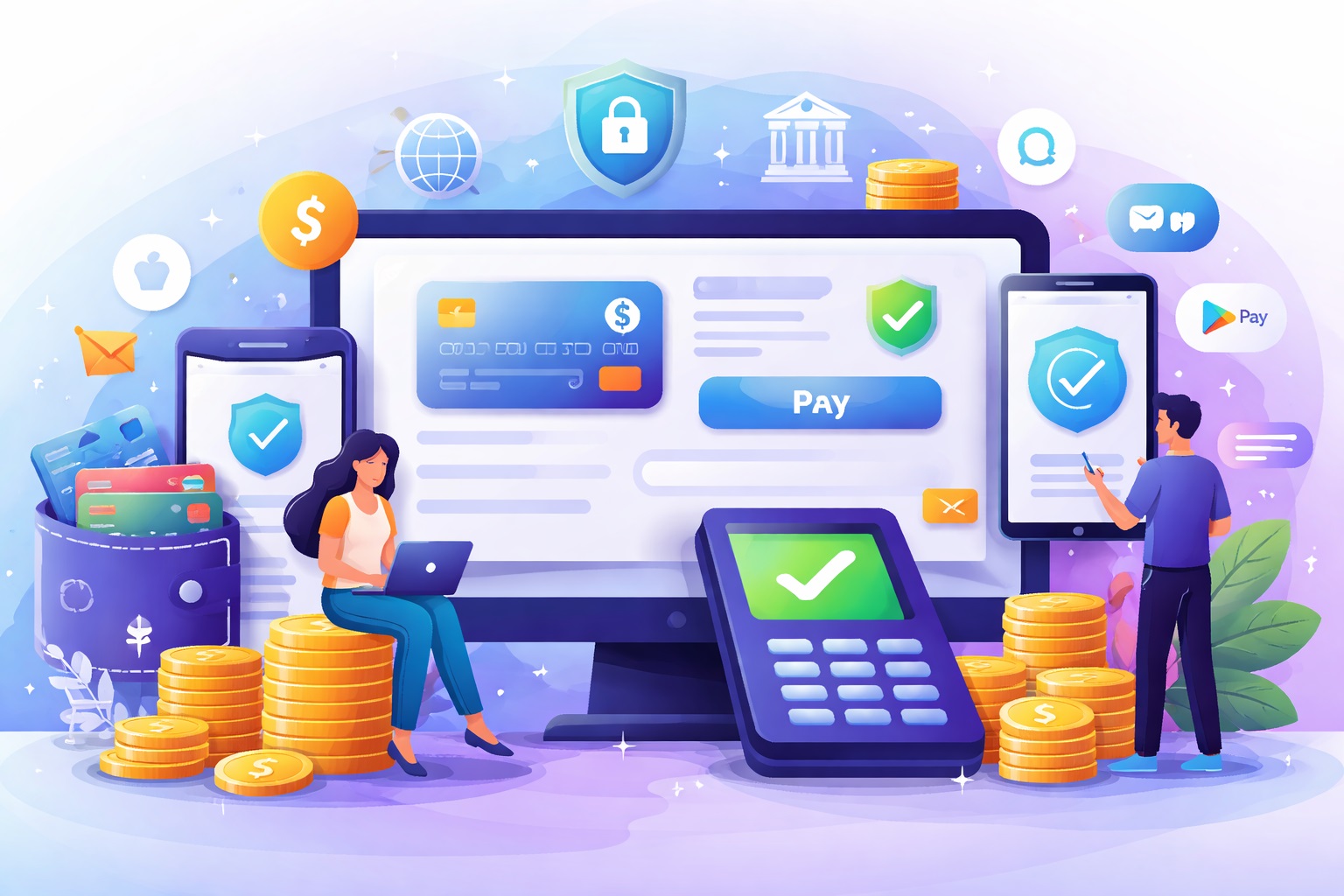
When it comes to online enterprises such as shops, SaaS platforms, subscription websites, marketplaces, or mobile applications, the payment gateway is an essential technology that you rely on on a daily basis.
You are unable to accept payments made using your bank’s online banking system, digital wallets, credit cards, debit cards, or debit cards if you do not have it. If it is not present, there will be no money flowing in.
However, here is the reality:
A great number of individuals who own digital enterprises make use of payment gateways without having a solid understanding of how they operate or how to choose the most suitable one.
What Is a Payment Gateway?
A payment gateway is a piece of technology that safely receives and processes payments from people who purchase things online.
Think of it as a card machine for the internet, like the ones you see in shops.
When someone types in their card information on your website, the payment gateway:
- Encrypts the data
- Sends it to the bank to get their okay.
- Checks to see whether the payment went through
- Puts the money into your merchant account
All of this takes place in a matter of seconds.
To put it simply:
The payment gateway is the safe link between your consumer, your company, and the bank.
Why Payment Gateways Are Essential for Digital Businesses
You can’t handle payments by hand if you operate a digital firm. Everything has to happen quickly, safely, and automatically.
This is why payment gateways are so important:
1. Secure Transactions
They use encryption and tokenization to keep consumer card information safe.
2. Global Payment Acceptance
You may take payments from consumers all around the globe.
3. Faster Revenue Collection
Transactions are handled right away.
4. Automation
You can automate anything, from invoicing and subscriptions to recurring payments.
5. Fraud Protection
Most gateways come with fraud detection mechanisms already built in.
Scaling an internet company is almost difficult without a payment gateway.
How a Payment Gateway Works (Step-by-Step)
Let’s break it down into easy steps.
Think about a consumer who buys something from your website for $50.
Step 1: Customer Enters Payment Details
They type in their credit card number, expiration date, and CVV.
Step 2: Encryption
Hackers can’t access this data since the gateway encrypts it.
Step 3: Authorization Request
The data that has been encrypted is transferred to:
- The bank that buys (your bank)
- The network of cards (Visa and Mastercard)
- The bank that issued the card (the customer’s bank)
Step 4: Bank Approval
The bank that issues the check checks:
- Is the card real?
- Are there enough funds?
- Is the deal shady?
Step 5: Response Sent Back
The bank delivers an answer that says yes or no.
Step 6: Funds Captured
If accepted, the money is set aside and then sent to your account.
This normally takes between 2 and 5 seconds.
Payment Gateway vs Payment Processor vs Merchant Account
A lot of people get these words mixed up. Let’s make it easier.
Payment Gateway
Manages consumer information and links systems.
Payment Processor
Moves money between banks.
Merchant Account
A unique bank account that holds money for a short time before it goes to your company bank account.
Some businesses put all three together. Some people keep them apart.
Knowing this distinction will help you choose the best option for your requirements and situation.
Types of Payment Gateways
Not every gateway works the same way. There are three primary kinds.
1. Hosted Payment Gateways
Customers are sent to a third-party website to finish paying.
For example:
- As soon as the customer clicks on “Pay Now,”
- They will be taken to a new page.
- After making a payment, they go back to your website.
Positives
- Very safe
- Simple to set up
- Less work to follow the rules
Negatives
- less control over the brand’s identity
- An increase in the number of conversions that might occur
Recommended for: This option is an excellent alternative for individuals who do not have a great deal of technical resources, as well as for small businesses and those who are just beginning their business.
2. Self-Hosted Payment Gateways
On your website, you provide your clients the opportunity to input their card information; however, after the information has been submitted, it is then sent to the server that is linked to the gateway from which it originated.
Positives
- More control over how users feel
- Better brand recognition
Negatives
More accountability for following the rules
Best for: SaaS systems and eCommerce shops that are growing.
3. API/Integrated Payment Gateways
Using APIs, you may fully integrate it into your website or app.
Your customers never leave your platform.
Positives
- A smooth experience
- Complete customisation
- Best for subscription plans
Negatives
- Needs technical setup
- More accountability for compliance
Best for: These include IT startups, SaaS companies, and online stores.
Key Features to Look for in a Payment Gateway
If you choose the incorrect gateway, you might lose money and clients.
Take a close look at the following to make an educated choice:
1. Security Standards (PCI-DSS Compliance)
Make that the gateway meets PCI-DSS standards. This implies it follows tight rules for keeping card data safe.
2. Fraud Detection Tools
Look for:
- 3D Secure login
- Monitoring for fraud using AI
- Handling chargebacks
3. Multi-Currency Support
If you wish to sell your products in different parts of the globe, you will need to be able to deal with other currencies. This is a must.
4. Recurring Billing Support
- SaaS
- Sites for members
- Boxes for subscriptions
- Courses online
5. Easy Integration
It is compatible with the following:
- Shopify
- WooCommerce
- Magento
- Custom APIs
- Apps for mobile devices
6. Transparent Pricing
Be careful of:
- Fees for setup
- Fees per month
- Fees for transactions
- Fees for doing business across borders
- Fees for chargebacks
Common Payment Gateway Fees Explained
Let’s make the prices easier to understand.
1. Transaction Fee
Usually 2% to 3% of each transaction.
For example, you may get $97 after fees if you sell something for $100.
2. Setup Fee
One-time cost for setting up (not all gateways charge this).
3. Monthly Fee
Regular service cost.
4. Chargeback Fee
Charged when a consumer disagrees with a purchase.
5. Cross-Border Fee
There is an extra fee for transactions that happen outside of the US.
Knowing these charges can help you keep your profit margins safe.
Security in Payment Gateways
You have to have security.
When consumers give you their card information, they expect:
- Encryption of data
- Tokenization
- Stopping fraud
- Safe login
If there is a data breach:
- You lose the confidence of your customers.
- You may face legal repercussions.
- Your business’s good name suffers
Always put security first, even if it means paying more.
Payment Gateways for Different Digital Business Models
Different kinds of enterprises have different needs and wants.
eCommerce Stores
Quick checkout
Several ways to pay
Stopping fraud
SaaS Businesses
Billing on a regular basis
Invoicing that happens automatically
Managing dunning
Marketplaces
- Split payments
- Vendor payouts
- KYC verification
Digital Course Creators
- Billing by subscription
- Help with coupons
- Accepting payments from all across the world
Don’t simply choose based on how popular it is; pick based on your company concept.
Mobile Payments and Digital Wallet Integration
Customers nowadays prefer:
- Pay with Apple
- Pay using Google
- Pay with Samsung
- Wallets on the internet
These choices should be available via your payment gateway.
Mobile-friendly checkout makes a big difference in conversions.
Global Expansion: What to Consider
When you want to market to people in other countries, think about the following:
Currency Conversion
Rates of conversion that happen automatically.
Local Payment Methods
Distinct nations like distinct ways.
Tax Handling
The procedure includes making VAT, GST, and sales tax automatic.
Settlement Time
How long will it take for the money to go to your account?
Going worldwide needs careful preparation.
Common Payment Gateway Challenges
There is no ideal system.
Here are some common problems that companies have:
1. High Transaction Fees
Solution: Talk about pricing as the amount of business grows.
2. Account Freezing
Often because of a suspicion of fraud or a company sector that is high risk.
3. Chargebacks
Manage with clear rules for refunds and ways to stop fraud.
4. Technical Downtime
Always choose suppliers that are dependable and have a lot of uptime.
How to Choose the Best Payment Gateway
Think about:
- Where are my customers?
- What kinds of payments do they like best?
- Do I need to sign up for anything?
- How much do I expect to sell each month?
- Is my company at a lot of risk?
Then compare suppliers based on:
- Costs
- Safety
- Easy to integrate
- Help for customers
- Time to pay
Don’t ever pick based just on pricing.
Future Trends in Payment Gateways
Digital payments are changing quickly.
1. AI-Powered Fraud Detection
More intelligent security systems.
2. Biometric Authentication
Fingerprint and face recognition payments are examples of biometric authentication.
3. Cryptocurrency Integration
More and more companies are starting to accept digital currency.
4. Buy Now, Pay Later (BNPL)
Payments in installments are helping to get more people to buy.
5. Embedded Finance
Payments are included right within the systems.
Staying up to date on the latest trends can help you stay competitive in the industry.
Why Payment Gateways Matter More Than Ever
Your payment gateway isn’t simply a tool in today’s digital market.
It’s what makes you money.
It has an effect on:
- Experience of the customer
- Rates of conversion
- Safety
- Reach around the world
- Margins of profit
Picking the appropriate one may make a big difference in how well your online company does.
You may do the following by learning how payment gateways work:
- Cut down on expenses
- Get more approvals
- Stop fraud
- Scale up throughout the world
- Get customers to trust you
If you want to develop a long-lasting digital company, you need to know how to set up payment systems.